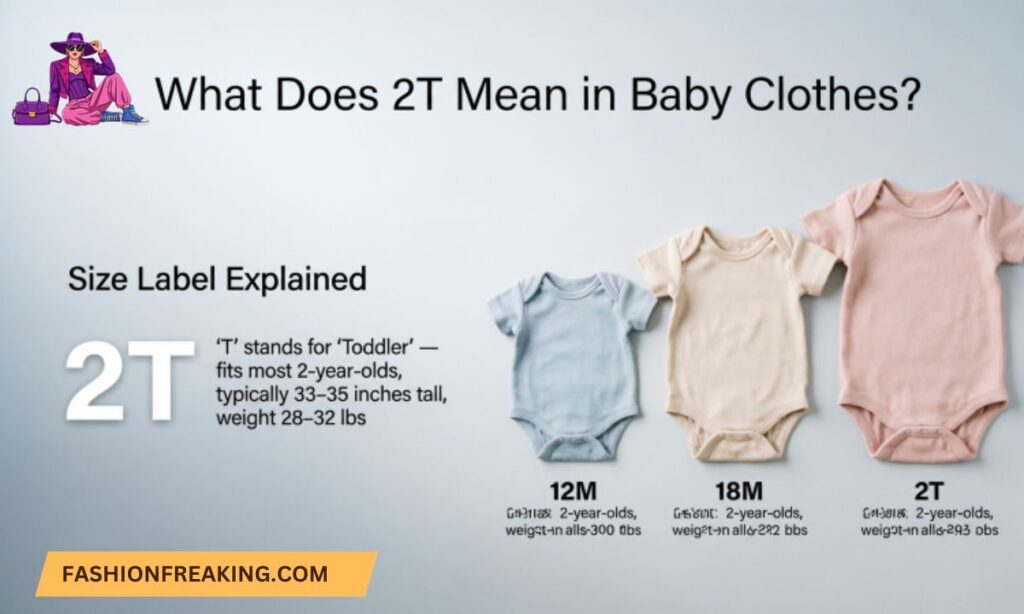
If you’ve ever stood in the baby aisle staring at a tag that reads “2T” and wondered what on earth it means — you’re not alone. It’s one of the most common questions new parents ask, and the answer is more nuanced than you might expect. 2T stands for “2 Toddler,” meaning the garment is designed specifically for toddlers around two years of age. But here’s where it gets interesting: “2T” and “24 months” are not the same thing, even though they seem like they should be.
This guide breaks down exactly what 2T means, how it compares to other sizes, and how to find the right fit for your growing child.
What Does the “T” Stand for in 2T?
The “T” in 2T simply stands for Toddler. Once your child graduates from the infant sizing system (which counts up in months — 0–3M, 6M, 12M, 18M, 24M), they move into the toddler sizing system, which uses T-based labels: 2T, 3T, 4T, and 5T.
The number before the T indicates the youngest age the clothing is designed to fit. So a 2T garment is made to fit a two-year-old, with some room to accommodate a child all the way up to age three.
This is actually the opposite of how baby sizing works. In baby sizes, the number represents the oldest age the clothing fits (so “18 months” fits babies up to 18 months old). In toddler sizing, 2T represents the youngest starting age.
2T Size Chart: Height and Weight
Because every child grows differently, age alone is a poor way to select clothing. Use your child’s actual measurements to match them to the right size.
| Size | Age Range | Approximate Height | Approximate Weight |
| 18M | 12–18 months | 30–32 inches | 20–24 lbs |
| 24M | 18–24 months | 32–34 inches | 24–28 lbs |
| 2T | 2–3 years | 34–36 inches | 28–30 lbs |
| 3T | 3–4 years | 36–39 inches | 30–34 lbs |
| 4T | 4–5 years | 39–42 inches | 34–40 lbs |
Pro Tip: Always measure your child’s height and weight before buying. Sizes vary significantly between brands, and what fits perfectly at one retailer may run small or large at another.
What Is the Difference Between 2T and 24 Months?
This is the question that trips up nearly every parent shopping for toddler clothes. The short answer: both sizes are for children around two years old, but they’re designed for different developmental stages.
Cut and Fit
The most noticeable difference is in the cut of the clothing. Size 24 months is designed with wider, roomier bottoms to accommodate the bulk of a diaper. The seat of 24-month pants tends to be curved and fuller. By contrast, 2T clothing features slimmer, straighter lines through the seat and legs — it’s cut for a child who is transitioning away from diapers and moving more like a “big kid.”
Snaps and Fasteners
Baby clothes in the 24-month range often include snaps along the bottom or inner legs to make diaper changes easier and faster. When you cross into 2T territory, those snaps disappear. You’ll find elastic waistbands, zippers, and buttons instead — features that help toddlers start dressing and undressing themselves as they build independence.
Length and Proportions
2T garments are generally slightly longer in the torso, sleeves, and pant legs than their 24-month counterparts. This reflects the more upright posture of a walking toddler versus a crawler or new walker. A 24-month top may sit shorter on the body, designed around the proportions of a baby who still spends time on the floor.
Style and Design
The style aesthetic shifts too. Size 24-month clothing often features classic baby motifs — soft pastels, animals, and nursery-inspired prints. 2T clothing tends to step into more toddler-friendly territory: bold colors, cartoon characters, and designs that appeal to a child who’s starting to have opinions about what they wear.
2T vs. 24 Months: Quick Comparison Table
| Feature | 24 Months | 2T |
| Age Range | 18–24 months (oldest age) | 2–3 years (youngest age) |
| Diaper Room | Yes — wider seat | No — slimmer cut |
| Snaps at Bottom | Often included | Usually not included |
| Pant Style | Curved, fuller rear | Straight, slim fit |
| Design Style | Baby-inspired | Toddler/kid-inspired |
| Best For | Still in diapers | Potty training or trained |
When Should You Switch from 24 Months to 2T?
There’s no universal moment to make the switch — it really depends on your individual child. That said, a few clear signals suggest it may be time to move to 2T:
- Your child has started or completed potty training. The 2T cut is designed with less diaper bulk in mind, so it’ll fit more comfortably once your child is in underwear or pull-ups.
- 24-month clothing is becoming too short in the legs, arms, or torso, even if the width still fits.
- Your child weighs around 28–30 pounds and stands between 34 and 36 inches tall.
- Your child is walking confidently and no longer crawling — the slimmer 2T cut is better suited to an upright, active toddler.
Some parents use a hybrid approach: 24-month clothing for nighttime when diapers or training pants are still worn, and 2T during the day for a more polished look.
Also Read This: Can You Wash Mold Out of Clothes?
Does 2T Sizing Differ by Brand?
Yes — and this is one of the more frustrating realities of children’s clothing shopping. There is no universal industry standard for what 2T measurements must be. One brand’s 2T may run large, while another’s runs small. Even between product lines within the same brand, sizing can vary.
What this means for you:
- Always check the brand’s specific size chart before purchasing, especially online
- When buying as a gift, ask for the child’s measurements rather than just their age
- If your child is between sizes, size up — you can roll up sleeves and hems, but you can’t add fabric
- Expect variation when mixing brands in a single outfit
Brands like Carter’s, Old Navy, Gap, and Target’s Cat & Jack all size slightly differently, even within the same 2T label.
Tips for Buying 2T Clothes That Actually Fit
Here are some practical tips to take the guesswork out of toddler clothing shopping:
- Measure, don’t guess. Height is the most reliable measurement for predicting fit. Have your child stand barefoot against a wall and measure from head to floor.
- Check weight ranges. Most brands list both height and weight ranges on their size charts. Use both, not just one.
- Buy bigger when in doubt. Toddlers grow fast. A slightly oversized 2T will fit for longer than something snug.
- Consider the season. If buying 2T clothing in advance for a future season, factor in how much your child will grow by then.
- Read brand reviews. Many parenting forums and product review sections mention whether a brand runs small, large, or true to size.
- Try before you buy when shopping in store — especially for shoes and pants, which have the least sizing flexibility.
FAQ’s
Is 2T the same as 24 months?
No. While both fit children around two years old, 2T has a slimmer cut without diaper room, while 24 months includes extra space for a diaper and often has snap closures.
What age wears 2T?
2T is generally worn by toddlers between 2 and 3 years old, though fit depends on your child’s individual height and weight.
Is 2T toddler or baby?
2T is a toddler size. It marks the transition from the infant/baby sizing system (measured in months) to the toddler sizing system (2T, 3T, 4T, etc.).
Can a 1-year-old wear 2T?
It depends on the child. Taller or heavier one-year-olds may fit into 2T, but the slim cut without diaper accommodation may not be practical if they’re still in diapers.
How long does a child stay in 2T?
Most children wear 2T for roughly 6 to 12 months, though fast growers may move on sooner and smaller toddlers may wear it longer.
Does 2T have room for diapers?
Generally, no. 2T is designed for children who are potty training or trained. For diaper-wearing toddlers, 24 months provides a better fit through the seat.
Is 2T the same size everywhere?
No. Sizing varies between brands. Always check the specific size chart for the brand you’re buying from.
Should I buy 2T or 3T if my child is between sizes?
Size up. A 3T that’s slightly large will last longer and can be adjusted with rolled cuffs, while a tight 2T is uncomfortable and won’t last.
Conclusion
Understanding what 2T means takes a little more than just knowing the number. It signals a real shift — from infant sizing to toddler sizing, from diapers to potty training, from baby-style garments to kid-friendly cuts. The key takeaway is that 2T is designed for active, walking toddlers aged roughly 2 to 3 years, with a slimmer fit and no diaper allowance built in.
When shopping, always use your child’s actual height and weight as your guide rather than their age. Check brand-specific size charts, buy slightly bigger when you’re unsure, and embrace the fact that your little one is officially in “big kid” territory. It goes fast — enjoy every outfit along the way.

Shoaib is the creative mind behind FashionFreaking.com, sharing trendy insights on shoes, jewelry, clothes, and modern fashion to inspire confidence, style, and everyday elegance for fashion lovers worldwide.