Discovered fuzzy spots or a persistent musty odor on your favorite clothes? You’re not alone — and you don’t necessarily have to throw those items away. Mold on clothing is a common household problem, but with the right approach, most affected garments can be fully salvaged.
This guide walks you through everything you need to know: how to identify mold on fabric, the most effective removal methods for different fabric types, and how to stop mold from coming back. Whether you’re dealing with a lightly affected cotton tee or a storage bin full of musty winter coats, this is the only guide you’ll need.
How to Identify Mold on Clothes?
Before you start treating, it helps to know exactly what you’re dealing with. Mold on clothing typically shows up in a few distinct ways:
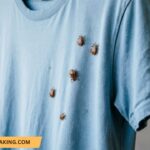
- Discolored spots: Mold usually appears as black, green, or dark brown patches — though it can also be white, red, or orange depending on the species and the fabric’s nutrients.
- Fuzzy or powdery texture: Active mold growth feels slightly raised or fuzzy to the touch. Flat, powdery spots are more likely mildew — a less invasive fungal cousin.
- Musty, earthy smell: That unmistakable damp, stale odor is often the first warning sign, sometimes appearing before visible growth.
- Skin reactions: If wearing a particular garment causes rashes, sneezing, or itchy eyes, mold contamination could be the culprit.
Catching mold early — while growth is still surface-level — dramatically improves your chances of fully removing it.
What You’ll Need Before You Start
Gather these supplies before handling any moldy clothing:
- Rubber gloves and a protective face mask
- A stiff-bristled brush or old toothbrush
- White distilled vinegar
- Borax powder
- Baking soda
- Hydrogen peroxide (3%)
- Oxygen-based bleach (for whites and colorfast fabrics)
- Laundry detergent
- A bucket or basin
- Access to sunlight for drying
Safety first: Always wear gloves and a mask when handling moldy garments. Mold spores can trigger allergic reactions, respiratory irritation, and skin rashes — even from brief exposure.
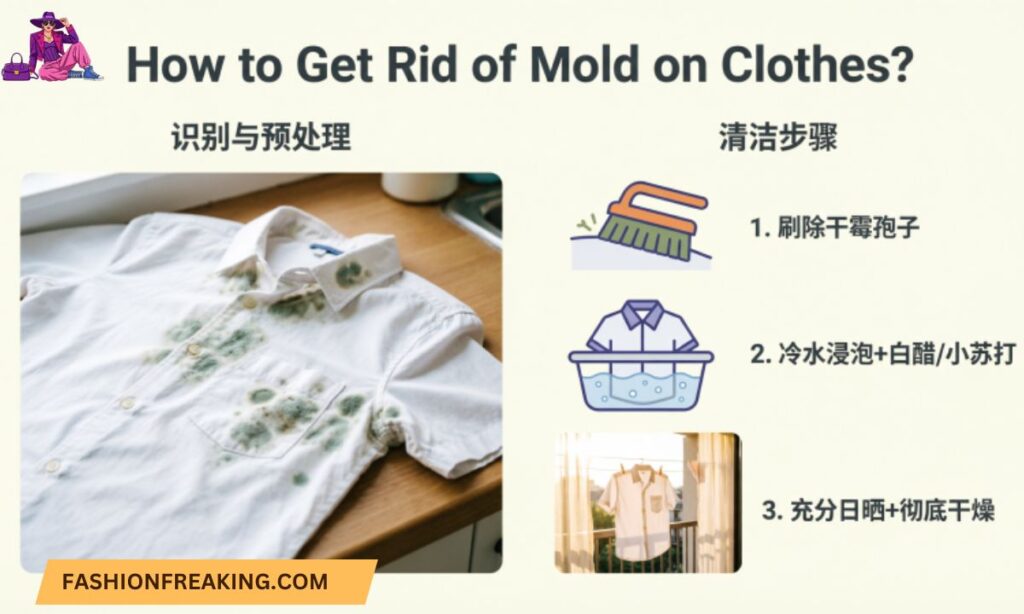
How to Get Rid of Mold on Clothes: Step-by-Step
Step 1: Take Clothes Outside Immediately
The very first thing to do is bring moldy clothing outdoors. This one step prevents mold spores from becoming airborne inside your home and contaminating other surfaces, furniture, or garments. Shake or brush the clothing gently outside — never indoors.
If you can’t go outside, move to a room with open windows and close off air vents leading to other rooms to limit spore travel.
Step 2: Brush Off Loose Mold Spores
Using a stiff-bristled brush or old toothbrush, gently work over the affected area to dislodge any surface mold. Don’t scrub too aggressively — the goal here is simply to loosen and remove what’s sitting on top before treatment. This step won’t eliminate the problem, but it reduces the mold load before washing.
Step 3: Pre-Treat the Moldy Area
Pre-treatment is the most critical step in effective mold removal from fabric. Choose the method that best matches your fabric type:
| Treatment Method | How to Use | Best For |
| White vinegar | Mix 1 part vinegar + 1 part water; spray or soak for 30–60 mins | Most washable fabrics; colors |
| Borax solution | Dissolve ½ cup Borax in 1–2 cups hot water; apply to stain | Thick fabrics (jeans, towels, denim) |
| Baking soda paste | Mix baking soda + water into a paste; apply for 15–20 mins | Delicate fabrics; odor removal |
| Hydrogen peroxide (3%) | Spray directly; leave for 10 minutes | Cotton, linen, and natural fibers |
| Oxygen-based bleach | Mix 1 part bleach in 3 parts water; soak 10–15 mins | White or colorfast fabrics only |
| Lemon juice + salt | Make a paste; apply and leave in sunlight | Light-colored cottons; mild mold |
After applying your chosen treatment, use a soft brush or cloth to gently work it into the affected fibers. Let it sit for the recommended time before moving on.
⚠️ Never mix bleach with vinegar or ammonia. This combination creates toxic chlorine gas. Use one or the other — never together.
Step 4: Wash in the Hottest Water Safe for That Fabric
After pre-treatment, wash the garment in your washing machine on the hottest water setting permitted by the care label. Most mold spores are killed at temperatures above 140°F (60°C), so heat is your ally here.
For added mold-killing power, add one of these to your wash cycle:
- 1 cup of white vinegar (added to the detergent tray or drum)
- ½ cup of Borax dissolved in hot water
- ½ cup of baking soda alongside your regular detergent
Wash moldy items in a separate load — never with clean clothing. Cross-contamination can spread spores to garments that were previously unaffected.
Step 5: Inspect Before Drying
Before moving clothes to the dryer or clothesline, inspect each item carefully. Check seams, pockets, folds, and cuffs — areas where mold can hide. If you still see spots or detect a musty odor, repeat the pre-treatment and wash cycle before drying. Putting moldy clothing in a hot dryer can bake any remaining stains into the fabric permanently.
Step 6: Dry in Direct Sunlight
Sun drying is the best finishing step for mold-affected clothing. UV rays from natural sunlight are a natural antifungal agent — they kill residual mold spores and help neutralize lingering odors without damaging fabric.
If sunlight isn’t available, use a dryer on high heat (where the care label allows), but only after you’re confident the mold has been fully removed.
Step 7: Clean Your Washing Machine
Don’t skip this step. Mold spores can survive inside the washing machine drum, door seal, or detergent drawer. After washing moldy clothes, run a hot empty cycle with 2 cups of white vinegar to kill any remaining contamination. Wipe down the rubber door gasket with a vinegar-soaked cloth and leave the door open afterward to air dry.
How to Remove Mold From Specific Fabric Types?
Not every garment responds to the same treatment. Here’s how to adjust your approach based on fabric type:
Cotton and Linen: These natural fibers absorb moisture and are highly prone to mold. They tolerate hot water washes well. Borax, vinegar, and hydrogen peroxide are all safe options.
Synthetic Fabrics (Polyester, Nylon): Synthetics are less absorbent but can hold onto musty odors stubbornly. Use warm (not boiling) water and white vinegar. Avoid high heat, which can warp or shrink synthetic fibers.
Denim and Thick Fabrics: Borax is particularly effective on thicker materials. Soak for a full hour before machine washing on a long cycle.
Delicate Fabrics (Silk, Wool, Lace): Avoid harsh treatments. A baking soda paste or gentle lemon and salt solution works best. Consider professional dry cleaning for any valuable or heavily affected delicate items.
Dry-Clean-Only Items: Don’t machine wash these. Seal the item in a plastic bag, take it to a professional dry cleaner, and point out the mold before handing it over. Call ahead — not all cleaners accept heavily mold-contaminated garments.
How to Get Mold Out of Clothes Without Bleach?
Bleach is effective but can damage colored fabrics, weaken fibers over time, and irritate skin. The good news is that there are plenty of bleach-free alternatives that work just as well — or better — for most fabrics:
- White vinegar is a natural antifungal that kills the majority of common mold species and neutralizes odors without damaging fabric color.
- Borax is a powerful natural mold inhibitor that is gentler on fibers than chlorine bleach and safe for most colored clothing.
- Hydrogen peroxide (3%) disinfects and whitens without the harshness of bleach, making it ideal for light-colored cotton and linen.
- Baking soda works as a gentle abrasive and odor absorber, especially when combined with vinegar in the wash cycle.
- Oxygen-based bleach (OxiClean-style) is color-safe and far milder than chlorine bleach while still being highly effective on mold stains.
Also Read This: Should You Throw Out Moldy Clothes?
How to Prevent Mold From Growing on Clothes?
Removing mold is a temporary fix unless you also address the conditions that caused it. Here’s how to keep your wardrobe permanently mold-free:
- Don’t let wet laundry sit. Transfer clothes to the dryer or clothesline within 1–2 hours of washing.
- Dry clothes completely before storing. Even slightly damp garments can develop mold inside a sealed wardrobe within 24–48 hours.
- Improve closet ventilation. Leave closet doors slightly open, use slatted shelving, or place a small fan nearby to encourage airflow.
- Use a dehumidifier in damp rooms — basements, bathrooms, and laundry areas are particularly prone to high humidity levels.
- Store seasonal clothing in breathable bags, not airtight plastic containers, especially in humid climates.
- Vacuum closets regularly to remove dust and organic matter that feed mold spores.
- Air out stored clothing periodically, especially items that haven’t been worn in several months.
FAQ’s
Does washing clothes kill mold?
Hot water washing kills most mold spores, but pre-treatment is essential. Washing alone without treating first often leaves behind stains and residual spores.
Can white vinegar remove mold from clothes?
Yes. White vinegar is one of the most effective natural treatments for mold on fabric. It kills most common mold species and neutralizes the musty odor.
Is it safe to wash moldy clothes in a washing machine?
Yes, but always wash them separately and follow up with an empty hot vinegar cycle to clean your machine afterward.
How long does it take to remove mold from clothes?
Most cases are resolved in one to two treatment-and-wash cycles totaling 2–3 hours, including soaking time and drying.
Can mold come back after washing?
Yes, if the root cause — humidity, poor ventilation, or damp storage — isn’t addressed. Removing mold and improving storage conditions together prevents recurrence.
What temperature kills mold on clothes?
Water at or above 140°F (60°C) kills most mold spores. Always check your garment’s care label before using high-temperature washes.
Does baking soda kill mold on clothes?
Baking soda helps lift and neutralize mold odors and works well as a complement to vinegar or borax, but it’s less potent as a standalone mold killer.
When should I take moldy clothes to a dry cleaner?
Take garments to a dry cleaner if they are labeled “dry clean only,” made from delicate fabrics like silk or wool, heavily mold-contaminated, or valuable enough to warrant professional care.
Conclusion
Getting rid of mold on clothes isn’t complicated — but it does require a methodical approach. The key is acting quickly: the sooner you treat mold-affected garments, the better your chances of fully restoring them. Start outside, pre-treat with vinegar, borax, or your chosen method based on fabric type, wash in hot water separately, and always finish with sun drying. Don’t forget to clean your washing machine afterward.
Pair that with good storage habits — dry clothes before storing, keep closets ventilated, and control household humidity — and mold on clothing can become a rare, easily managed problem rather than a recurring headache. With the right tools and a little patience, that musty wardrobe disaster is very much recoverable.

Shoaib is the creative mind behind FashionFreaking.com, sharing trendy insights on shoes, jewelry, clothes, and modern fashion to inspire confidence, style, and everyday elegance for fashion lovers worldwide.