Discovered dark spots, a musty odor, or fuzzy patches on your favorite shirt? Mold and mildew on clothes is more common than you’d think — and the good news is that it’s usually fixable.
Whether you left a wet towel crumpled on the floor or forgot laundry in the washing machine overnight, this guide covers how to get mold stains out of clothes using proven methods, from natural remedies to stronger chemical treatments.
Act quickly: the fresher the mold growth, the better your chances of full removal.
What Causes Mold on Clothes?
Mold is a fungus that thrives in warm, damp, and poorly ventilated environments. It shows up on fabric as black, green, grey, or brown spots — often accompanied by a distinctive musty smell.
Common causes include:
- Leaving wet clothes in the washing machine too long
- Storing damp garments in a closed drawer, bag, or basement
- High humidity in a laundry room or closet
- Folding and packing clothes before they’re fully dry
Understanding the cause matters because it affects which removal method will work best — and how to prevent it from coming back.
Before You Start: Important Safety Steps
Mold spores can spread during handling, so a little preparation goes a long way before you start treating moldy garments.
- Wear rubber gloves and, ideally, a dust mask.
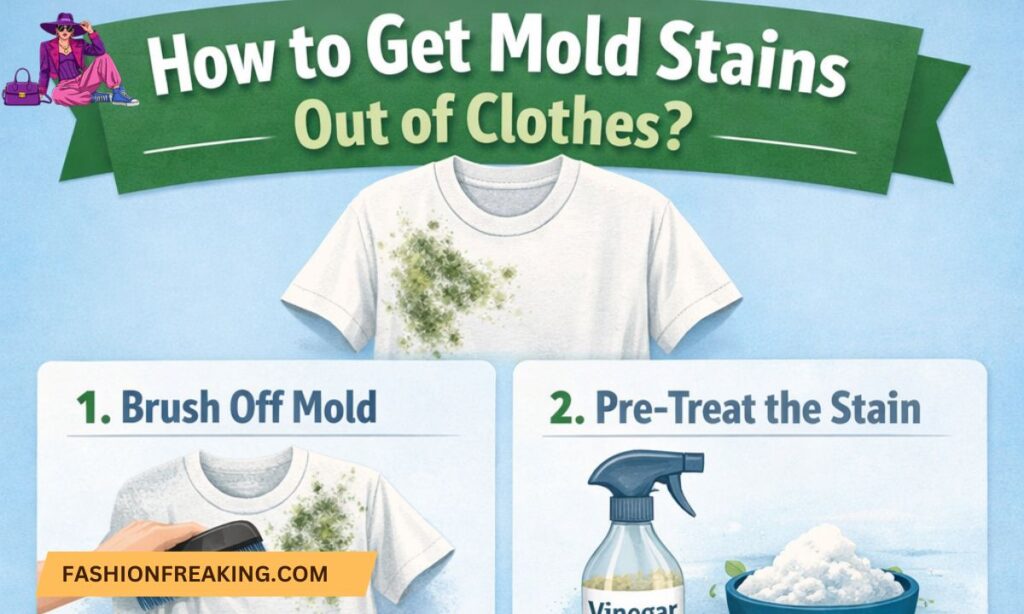
- Take clothes outside to brush off visible mold spores before bringing them indoors for treatment. This prevents spores from spreading through your home.
- Check the care label on every affected garment. The treatment method you choose must align with what the fabric can tolerate.
- Bag dry-clean-only items in a plastic bag and bring them to a professional dry cleaner — explain the mold issue specifically.
- Test any cleaning solution on a hidden area of the fabric first to check for color damage or fiber reactions.
6 Effective Methods to Remove Mold Stains from Clothes
Method 1: White Vinegar (Best All-Around Natural Option)
Distilled white vinegar is one of the most effective and widely recommended solutions for killing mold spores and neutralizing musty odors without harsh chemicals.
How to use it:
- Apply distilled white vinegar directly to the mold stain.
- Let it sit for at least one hour to penetrate the fibers.
- For widespread staining, soak the garment in a bucket of water mixed with 1–2 cups of white vinegar for up to an hour.
- Wash the clothing in the hottest water safe for that fabric, adding another cup of vinegar to the wash cycle.
- Air dry in direct sunlight — UV rays help kill any remaining mold spores.
⚠️ Note: Vinegar is generally safe for most fabrics, but people who have experienced mold-related health conditions like Chronic Inflammatory Response Syndrome (CIRS) should avoid vinegar as a cleaning agent due to cross-sensitivity reactions.
Method 2: Baking Soda (Best for Odor Removal)
Baking soda is a natural deodorizer and mild abrasive that works well on mold odors and light staining, particularly when combined with vinegar.
How to use it:
- Make a paste by mixing equal parts baking soda and water.
- Apply the paste directly to the stained area and gently scrub with a soft-bristled brush or old toothbrush.
- Let it sit for 30 minutes.
- Rinse thoroughly, then machine wash.
- Alternatively, add ½ cup of baking soda directly to your washing machine drum along with your regular detergent.
Baking soda and vinegar can also be combined: apply the vinegar first, sprinkle baking soda on top to create a fizzing action, let it work for 20–30 minutes, then scrub and rinse.
Method 3: Borax (Best for Deep Mold Killing)
Borax is a naturally occurring mineral compound and a powerful mold killer. Unlike bleach, it doesn’t produce harmful fumes, and unlike vinegar, it doesn’t leave an odor. It’s also absorbed into fabric fibers, which means it has a longer-lasting mold-inhibiting effect.
How to use it:
- Mix ½ cup of Borax into hot water and stir until fully dissolved (Borax needs warm or hot water to activate properly).
- Soak the affected garments in this solution for 30–60 minutes.
- Add the same Borax solution (or ½ cup Borax powder) to your washing machine during the wash cycle.
- Wash on the hottest setting the care label allows.
- Dry thoroughly in sunlight or on a high heat dryer setting.
Method 4: Oxygen-Based Bleach (Best for Colors)
Oxygen bleach (sodium percarbonate) is the go-to option for removing mold stains from colored clothes. It’s significantly gentler than chlorine bleach but highly effective against fungal staining and odors. Products like OxiClean or Clorox 2™ for Colors fall into this category.
How to use it:
- Dissolve ⅔ cup of oxygen bleach powder in 2 gallons of hot water.
- Pre-soak bright colors for 30 minutes; darker or mixed colors for up to 1 hour.
- Machine wash in the hottest water safe for the garment, adding more oxygen bleach to the wash cycle.
- Air dry and inspect. Repeat if any staining remains.
Oxygen bleach is generally safe for most colorfast fabrics but should not be used on silk or wool.
Method 5: Chlorine Bleach (Best for White Fabrics)
For white cotton or other bleach-safe fabrics, chlorine bleach (sodium hypochlorite) is the most powerful weapon against stubborn mold stains and deep-set mildew.
How to use it:
- Do a bleachability test first: mix 2 teaspoons of bleach with ⅓ cup of water, apply a drop to a hidden area, wait 1 minute, and blot dry. If the color changes, don’t use bleach.
- Add ⅓ cup of chlorine bleach to the washing machine along with your detergent.
- Wash in the hottest water the garment allows.
- Air dry or tumble dry on high heat.
⚠️ Always wear rubber gloves and work in a well-ventilated area when using chlorine bleach. Never mix bleach with vinegar or ammonia — this creates toxic fumes.
Method 6: Rubbing Alcohol (Best for Delicate Fabrics)
For delicate or dry-clean-adjacent fabrics that can’t tolerate soaking, a diluted alcohol solution can treat surface mold without risking damage.
How to use it:
- Mix 1 cup of rubbing alcohol with 1 cup of water.
- Dampen a clean cloth with the solution and gently blot — don’t rub — the mold stain.
- Allow to air dry completely in sunlight if possible.
- Repeat as needed.
⚠️ Do not use alcohol on acetate, triacetate, or acrylic fibers — it can damage these materials.
Also Read This: Are Shein Clothes Safe to Wear?
Method Comparison at a Glance
| Method | Best For | Safe on Colors? | Kills Mold Spores? | Removes Odor? |
| White Vinegar | General use | ✅ Yes | ✅ Yes | ✅ Yes |
| Baking Soda | Odor + light stains | ✅ Yes | Partially | ✅ Yes |
| Borax | Deep mold, prevention | ✅ Yes | ✅ Yes | ✅ Yes |
| Oxygen Bleach | Colored clothes | ✅ Yes | ✅ Yes | ✅ Yes |
| Chlorine Bleach | White fabrics only | ❌ No | ✅ Yes | ✅ Yes |
| Rubbing Alcohol | Delicate fabrics | ✅ Yes | Partially | Partially |
Step-by-Step: Full Mold Stain Removal Process
Here’s how to put it all together for best results:
- Take clothes outside and brush off visible mold spores with a soft brush.
- Check the care label and choose your cleaning method accordingly.
- Pre-treat the stain using your chosen solution (vinegar, borax paste, or oxygen bleach soak).
- Let it dwell — most solutions need 30 minutes to 1 hour of contact time.
- Machine wash on the hottest setting safe for the fabric, adding your cleaning agent to the cycle.
- Inspect before drying — never put a garment in the dryer if staining remains. Heat sets stains permanently.
- Dry in direct sunlight when possible. UV rays naturally kill residual mold spores and help bleach out staining.
- Repeat if needed — stubborn or old mold stains may require two or three full treatment cycles.
How to Prevent Mold from Growing on Clothes Again?
Removing the stain is only half the battle. Preventing regrowth is just as important.
- Always ensure clothes are completely dry before folding or storing them.
- Never leave wet laundry sitting in the washing machine for more than 1–2 hours.
- Store clothes in well-ventilated, dry spaces — avoid damp basements or tightly sealed bags.
- Use a dehumidifier in laundry rooms or closets with moisture issues.
- Run a monthly washing machine cleaning cycle with bleach or a washing machine cleaner to prevent mold buildup inside the drum.
- Consider using a mold-resistant laundry detergent for areas with persistent humidity problems.
When to Give Up and Call a Professional (or Toss the Garment)
Most mold stains respond to home treatment — but not all. Consider professional dry cleaning if:
- The garment is labeled “dry clean only”
- The mold has been present for a long time and has penetrated deep into the fabric
- The staining covers a large area and multiple treatment cycles have failed
- The garment has significant sentimental or monetary value
If the mold growth is extensive, the fabric smells even after repeated washing, or the fibers appear damaged or weakened, the safest option may be to discard the item. Wearing heavily mold-contaminated clothing — especially for people with respiratory conditions, allergies, or mold sensitivities — can pose real health risks.
Conclusion
Getting mold stains out of clothes is entirely doable with the right approach and a little patience. For most everyday cases, white vinegar or borax will handle the job naturally and safely. For white fabrics, chlorine bleach gives the strongest result. For colored garments, oxygen bleach hits the sweet spot between power and fabric safety. The key is acting promptly, treating before you dry, and always letting clothes dry fully before putting them away.
Follow these steps and your wardrobe — and your nose — will thank you.
Frequently Asked Questions
Can mold stains be permanently removed from clothes?
Yes, in most cases — especially if treated quickly. Very old or deep-set stains may be harder to fully remove.
Does washing clothes in hot water kill mold?
Hot water helps, but it works best when combined with a mold-killing agent like vinegar, borax, or bleach.
Can I put moldy clothes in the washing machine?
Yes, but brush off loose spores outside first and wash the moldy items separately from unaffected clothes.
Does sunlight kill mold on clothes?
Yes — UV rays from direct sunlight help kill residual mold spores and can naturally lighten remaining staining.
Why do my clothes still smell musty after washing?
Mold spores may still be present. Try re-washing with white vinegar or borax, or add a laundry sanitizer to the rinse cycle.
Is it safe to wear clothes with mold on them?
No — mold can cause skin irritation, allergic reactions, and respiratory issues, especially in sensitive individuals. Always treat before wearing.
Can baking soda alone remove mold from clothes?
Baking soda is better for odor than stain removal. It works best when combined with vinegar or another mold-killing agent.
How do I get black mold out of white clothes?
Chlorine bleach is the most effective option for black mold stains on white or bleach-safe fabrics. Always test first and follow safety precautions.

Shoaib is the creative mind behind FashionFreaking.com, sharing trendy insights on shoes, jewelry, clothes, and modern fashion to inspire confidence, style, and everyday elegance for fashion lovers worldwide.