
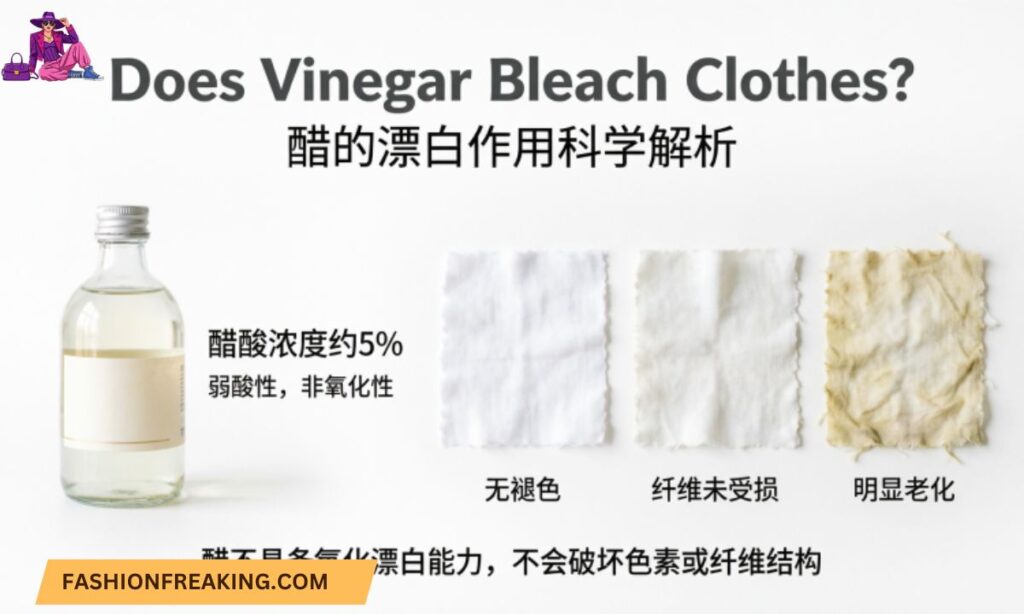
Vinegar has earned a devoted following in the laundry room. It’s cheap, natural, and people swear by it for everything from softening towels to eliminating musty odors. But one question keeps coming up: does vinegar bleach clothes? Will it strip color from your favorite shirt? Will it whiten your dingy whites? Or is it safe to use on any fabric without worrying at all?
The answer isn’t black and white — and understanding the nuance could save you from accidentally ruining a garment you love. Let’s get into it.
The Short Answer: Does Vinegar Bleach Clothes?
White distilled vinegar has a very mild brightening effect — but it is not a bleach. It will not strip color from your clothes the way chlorine bleach does. However, it can cause color changes under specific conditions, particularly when used in large quantities, used too frequently, or when it interacts with pH-sensitive dyes.
Think of it this way: vinegar is an acid (acetic acid, typically 5% concentration). That mild acidity is what makes it useful for dissolving mineral deposits, cutting soap buildup, and brightening whites. But that same acidity is exactly what can cause problems if you’re not careful about when, how, and how much you use.
How Vinegar Interacts With Fabric and Color?
On White Clothes
Vinegar is genuinely helpful here. Over time, white fabrics develop a yellow or gray tint caused by detergent residue, hard water mineral deposits, and deodorant buildup. The acetic acid in white vinegar dissolves that buildup, restoring the fabric’s natural brightness.
Adding ½ to 1 cup of white vinegar to the rinse cycle when washing whites can help maintain their brightness and prevent that gradual dinginess from setting in. This isn’t dramatic bleaching — it’s more accurate to call it a color-safe brightener that removes residue-related dullness rather than lifting actual pigment.
For a stronger whitening boost, some laundry experts suggest combining ½ cup of vinegar, ½ cup of lemon juice, and 1 tablespoon of borax as a pre-soak solution. The citric acid and mild bleaching action of lemon juice work alongside the vinegar’s descaling properties.
On Colored Clothes
Here’s where things require a little more care. Vinegar can alter the color of pH-sensitive dyes — those are dyes that change hue when exposed to acidic or alkaline environments. If a dye is pH-sensitive, repeated exposure to vinegar’s acidity can cause it to shift, fade, or look washed out over time.
Fabrics that are more vulnerable to vinegar-related color change include:
- Cotton — especially when exposed to undiluted or high-concentration vinegar regularly
- Linen — natural fibers can be weakened by prolonged acid exposure
- Rayon and nylon — these synthetic and semi-synthetic fabrics are more susceptible to acidic damage
- Delicate, handmade, or plant-based dyes — natural dyes are often pH-sensitive
The key word is moderation. Using a measured half-cup of standard white vinegar in the rinse cycle occasionally is very different from soaking a colored garment in undiluted vinegar for an extended period.
The Type of Vinegar Matters — A Lot
Not all vinegar is the same, and the type you choose has a direct impact on whether it’s safe for laundry.
| Vinegar Type | Acidity Level | Safe for Laundry? | Notes |
| Distilled White Vinegar (5%) | Low | ✅ Yes | Best all-purpose laundry option |
| Apple Cider Vinegar (5%) | Low | ✅ Yes | Works similarly to white vinegar |
| Cleaning Vinegar (6–10%) | Higher | ⚠️ Use with caution | Higher acidity can bleach fabrics or damage washer components |
| Red Wine Vinegar | Low | ❌ No | Can stain fabrics |
| Balsamic Vinegar | Low | ❌ No | Dark color will stain |
| Brown/Malt Vinegar | Low | ❌ No | Risk of discoloration |
The most important takeaway from this table: stick to standard distilled white vinegar for laundry. Products labeled as “cleaning vinegar” have a significantly higher acetic acid concentration and can genuinely bleach or weaken fabrics — the opposite of what most people are trying to achieve.
What Vinegar Actually Does Well in the Laundry
When used correctly, white vinegar brings real, practical benefits to your laundry routine:
Brightens Whites Without Harsh Chemicals
By dissolving mineral deposits and soap residue, vinegar restores white fabrics’ natural brightness without the harshness of chlorine bleach.
Eliminates Stubborn Odors
Vinegar neutralizes odors at their source rather than masking them. It works particularly well on sweat odors from gym clothes, smoke, pet smells, and mildewy towels. A quick vinegar rinse or a pre-soak in a diluted vinegar solution can make a significant difference.
Natural Fabric Softener
Vinegar softens fabrics by breaking down soap and detergent residue that accumulates in fibers over time. This is especially noticeable on towels, which can become stiff and rough when detergent or hard water minerals build up in the fabric.
Helps with Stain Pre-Treatment
Vinegar is effective for pre-treating specific stain types before laundering:
- Coffee and tea stains: Soak in a 1:2 vinegar-to-water solution
- Deodorant stains: Mix 1 cup of white vinegar with 4 cups of warm water and apply directly
- Grass stains on whites: Soak in full-strength vinegar for 30 minutes before washing
- Mildew stains: Apply a paste of salt, vinegar, and water to the affected area
Reduces Static Cling
The acid in vinegar helps prevent static buildup, which means lint and pet hair are less likely to cling to your clothing after drying.
Also Read This: How to Sell Clothes on Poshmark?
When Vinegar Can Cause Problems
For all its benefits, vinegar isn’t suitable for every laundry situation. Knowing when not to use it is just as important.
Don’t Mix Vinegar With Chlorine Bleach — Ever
This is a safety issue, not just a fabric care issue. Mixing vinegar (an acid) with chlorine bleach (sodium hypochlorite) creates a chemical reaction that releases toxic chlorine gas. This can cause respiratory irritation, burning eyes, and more serious health effects in a confined space like a laundry room.
If you use bleach in a wash cycle, skip the vinegar entirely. If you want to use both at different stages, run a full rinse cycle between them.
Don’t Mix Vinegar With Baking Soda
This combination is popular in DIY cleaning tutorials, but mixing vinegar with baking soda produces carbon dioxide gas and results in a neutralization reaction. The acid and base cancel each other out, leaving behind water and sodium acetate — stripping both ingredients of their individual cleaning power. Use them separately for maximum benefit.
Avoid Vinegar on Dry-Clean-Only Fabrics
If a garment’s care tag says dry clean only, keep vinegar away from it. Delicate fabrics such as wool, silk in some cases, acetate, and structured garments can be damaged by water-based treatments including vinegar.
Don’t Use Vinegar Too Frequently on the Same Fabrics
Occasional use is safe for most washable fabrics. But regular, repeated soaking in vinegar can gradually weaken fibers, particularly in cotton, linen, and synthetic blends.
How to Use Vinegar Safely in Laundry: Step-by-Step
- Choose the right vinegar. Use standard distilled white vinegar with 5% acetic acid. Avoid cleaning vinegar.
- Spot test first. Before treating a colored garment, apply diluted vinegar to an inconspicuous area and wait 15–30 minutes to check for any color shift.
- Dilute when in doubt. For colored clothes, always dilute vinegar with water rather than applying it at full strength.
- Add to the rinse cycle, not the wash. Adding vinegar directly to the wash can interfere with your detergent’s effectiveness. The fabric softener dispenser or a direct addition at the rinse cycle is the most effective and safest approach.
- Use measured amounts. Half a cup (½ cup) per load is the standard recommendation — more is not better.
- Never add to the same cycle as bleach. Separate by at least one full rinse cycle if you use both in a laundry routine.
Vinegar vs. Bleach: A Side-by-Side Comparison
| Feature | White Vinegar | Chlorine Bleach |
| Bleaching strength | Mild brightening | Strong color removal |
| Safe on colors | Mostly yes (when diluted, used sparingly) | No — strips color |
| Safe on whites | Yes | Yes (but can weaken fibers over time) |
| Odor removal | Excellent | Good |
| Fabric softening | Yes | No |
| Eco-friendly | Yes | No |
| Mixing safety | Never mix with bleach | Never mix with vinegar or ammonia |
| Best use | Brightening, deodorizing, softening | Disinfecting, heavy stain removal on whites |
Frequently Asked Questions
Does white vinegar damage colored clothes?
It can if used undiluted or too frequently. Occasional, measured use in the rinse cycle is generally safe for most colored fabrics, but always spot test pH-sensitive dyes first.
Can vinegar be used as a substitute for bleach?
Not as a true replacement. Vinegar brightens whites by removing residue and buildup, but it won’t disinfect or remove heavy stains the way chlorine bleach does.
Will vinegar leave my clothes smelling like vinegar?
No — the vinegar scent dissipates completely during the rinse and drying process. You won’t smell it on your finished laundry.
Is apple cider vinegar as effective as white vinegar for laundry?
Yes, it performs similarly for laundry purposes. However, white vinegar is clearer and less likely to leave any tint on very light fabrics, making it the preferred choice.
Can you put vinegar directly into the washing machine drum?
Experts generally advise against it. Adding vinegar directly to the drum can interfere with detergent performance and may cause long-term damage to washer seals and rubber hoses. The fabric softener dispenser or manual addition at the rinse cycle is safer.
Does cleaning vinegar bleach clothes?
Yes, it can. Cleaning vinegar has a higher acetic acid concentration (around 6–10%) than standard white vinegar, making it strong enough to bleach or damage certain fabrics. Avoid it for laundry use.
Is vinegar safe for all fabric types?
No. Avoid using vinegar on dry-clean-only fabrics, wool, and delicate silks. Use it cautiously on cotton, linen, rayon, and nylon — especially with repeated or undiluted applications.
Conclusion
So — does vinegar bleach clothes? The complete answer is: standard white vinegar has a very mild brightening effect on whites, but it doesn’t bleach fabric like chlorine bleach does. Used correctly — diluted, in moderate amounts, added during the rinse cycle — it’s a useful, eco-friendly laundry tool that brightens whites, neutralizes odors, softens fabrics, and breaks down stubborn residue.
The risks come from overuse, using the wrong type of vinegar, applying it to vulnerable fabrics without spot testing, or — most critically — mixing it with bleach. Stick to distilled white vinegar, use half a cup per load, and spot test colored items before treating them. Done right, vinegar is one of the most practical and affordable additions to a smarter laundry routine.

Shoaib is the creative mind behind FashionFreaking.com, sharing trendy insights on shoes, jewelry, clothes, and modern fashion to inspire confidence, style, and everyday elegance for fashion lovers worldwide.