
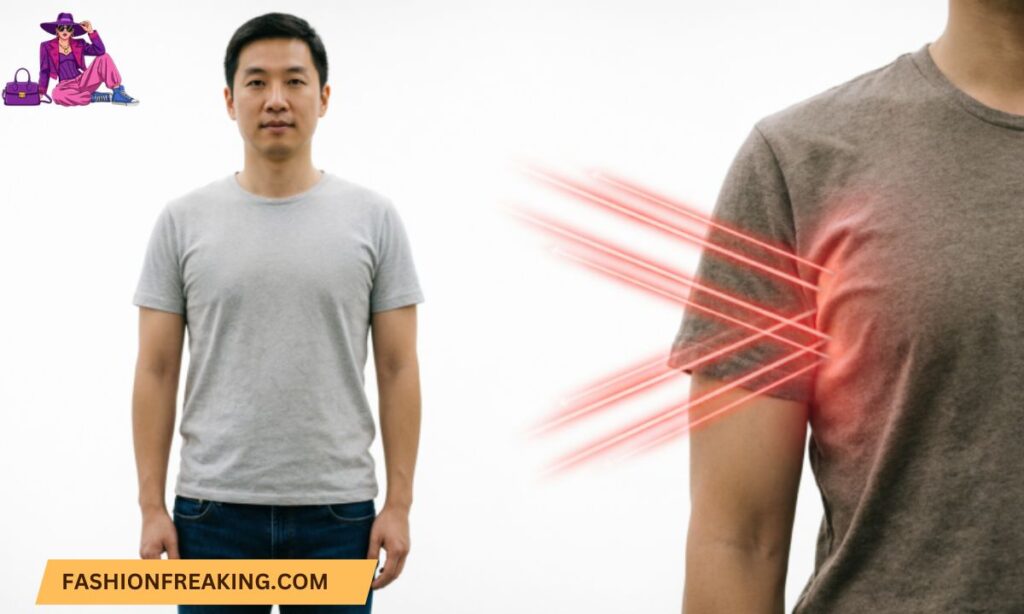
Red light therapy (RLT) is one of the fastest-growing wellness treatments today — praised for its ability to support skin rejuvenation, muscle recovery, pain relief, and cellular healing. But if you’ve ever wondered whether you can keep your clothes on during a session, you’re not alone. It’s one of the most commonly searched questions about this therapy.
The short answer: red light therapy does not work as effectively through clothes. Direct skin exposure is required for optimal results. However, the full picture is more nuanced — and understanding it can help you get the most out of every session.
How Does Red Light Therapy Actually Work?
Red light therapy uses specific wavelengths of light — typically red light (620–700nm) and near-infrared (NIR) light (700–1000nm) — to penetrate the skin and stimulate cellular activity. When these wavelengths reach the mitochondria inside your skin cells, they trigger increased ATP (adenosine triphosphate) production. ATP is essentially the energy currency of the body, and more of it means faster cell repair, better circulation, and reduced inflammation.
This process, known as photobiomodulation (PBM), is backed by a growing body of research. Clinical studies on low-level laser therapy (LLLT) have consistently shown that direct skin contact produces the most reliable and measurable results. The moment you introduce a barrier — including clothing — between the light source and your skin, you interrupt this energy transfer.
So, Does Red Light Therapy Work Through Clothes?
The honest answer depends on what type of clothing you’re wearing. Not all fabrics behave the same way under therapeutic light.
Real-world testing by photobiomodulation researchers shows just how much fabric matters. In one experiment using a baseline irradiance of 61 mW/cm²:
| Fabric Tested | Irradiance After Penetration | % Energy Retained |
| No fabric (bare skin) | 61 mW/cm² | 100% |
| Thick white t-shirt | 33 mW/cm² | ~54% |
| Thin black t-shirt | 1.5 mW/cm² | ~2–3% |
| Black lycra bike shorts | Very low | Minimal |
| Thick neoprene knee sleeve | Near zero | Negligible |
The results are eye-opening. A simple black t-shirt — even a thin one — blocks approximately 97–98% of red and near-infrared light. A white t-shirt, by contrast, allows roughly half the light through. Color and weave density are the two biggest factors.
Why Clothing Blocks Red Light Therapy
Understanding why fabric interferes helps clarify what to do about it.
Color absorption: Dark fabrics, especially black, absorb light wavelengths rather than allowing them to pass through. This is the same reason a black car heats up faster in the sun. When red and NIR wavelengths hit dark clothing, most of the energy is absorbed by the fabric — never reaching your skin cells at all.
Weave density and thickness: Tightly woven or thick materials create a physical barrier that reduces light transmission. Denim, neoprene, sweatpants, and leggings are among the worst offenders. Even when the color is light, heavy layering significantly reduces penetration depth.
Synthetic materials: Fabrics like polyester and nylon can reflect or scatter light unevenly, leading to inconsistent dosing even if some wavelengths do pass through.
Multiple layers: Even two layers of a light t-shirt material can meaningfully reduce the amount of NIR light reaching the skin compared to a single layer.
NIR Light vs. Red Light: Which Penetrates Clothing Better?
Near-infrared light (700–1000nm) has longer wavelengths than visible red light, which means it naturally penetrates deeper into tissue — up to several centimeters beneath the skin surface. Because of this, NIR can pass through thin, light-colored clothing to a limited degree.
Visible red light (620–700nm), on the other hand, is more easily absorbed and scattered. It is far more susceptible to being blocked by fabric. If your goal is skin-level benefits — collagen stimulation, wound healing, acne reduction — red light must reach the surface of the skin directly.
Key takeaway: NIR light through thin fabric may still provide some deep-tissue benefit (muscle recovery, joint support), but red light through fabric is largely ineffective for surface-level skin treatments.
What Clothing Is Acceptable If You Must Stay Dressed?
There are situations where full undressing isn’t practical — public wellness clinics, shared spaces, or personal preference. In these cases, choosing the right clothing can minimize energy loss.
Best fabrics for light penetration:
- Lightweight cotton or linen (single layer)
- White or light-colored clothing
- Loosely woven, breathable materials
- Thin moisture-wicking athletic wear (light colors only)
Fabrics to avoid:
- Dark or black clothing of any kind
- Denim or heavy canvas
- Neoprene, rubber-based sleeves
- Thick sweatshirts or layered garments
- Metallic or reflective fabrics
If treating a targeted area like a knee, shoulder, or lower back, simply rolling up your sleeve or exposing just that area is far more effective than treating through clothing.
When Is Direct Skin Exposure Non-Negotiable?
For certain treatment goals, there is no substitute for bare skin contact. These include:
- Anti-aging and skin rejuvenation: Collagen production and fibroblast stimulation require red light at the skin surface. Fabric blocks this entirely.
- Acne and wound healing: Surface-level photobiomodulation demands direct contact.
- Scar reduction: Research on hypertrophic scars and keloids consistently emphasizes bare skin application.
- Hair growth treatments: Scalp devices must contact the scalp directly.
For deep-tissue goals like muscle recovery and joint pain, NIR light through thin, light fabric may still offer some partial benefit — but results will still be inferior to direct skin exposure.
Tips to Maximize Your Red Light Therapy Results
Getting the most out of your sessions comes down to consistency and preparation. Here’s what actually makes a difference:
- Expose the target area directly — remove clothing from the area being treated whenever possible.
- Clean, dry skin works best — avoid thick creams, sunscreen, or oils before a session, as these can scatter light.
- Stay hydrated — research suggests well-hydrated cells may absorb light energy more effectively.
- Maintain the correct distance — most devices work best at 6–12 inches from the skin. Check your device’s manual.
- Be consistent — 2–5 sessions per week of 10–20 minutes each typically yields the best long-term outcomes.
- Use the right wavelength for your goal — red light (630–660nm) for skin; NIR (810–850nm) for deep tissue and muscle.
Also Read This: How to Get Mildew Stains Out of Clothes?
Common Misconceptions About Red Light Therapy and Clothing
“NIR penetrates deeply, so clothes don’t matter.” While NIR does travel deeper into tissue than red light, it still loses significant energy when passing through fabric. The finite penetration depth of each wavelength means any obstacle — including a thin shirt — reduces how far the light ultimately reaches.
“White clothing reflects light back into the skin.” White fabric does allow more light through than dark fabric, but it still scatters and absorbs a portion of the wavelengths. It doesn’t act as a mirror directing light inward.
“I can double my session time to compensate for wearing clothes.” Doubling your session while clothed doesn’t replicate a bare-skin session. Light energy lost to fabric is simply gone — more time won’t recover it.
Frequently Asked Questions
Does red light therapy work through a thin white shirt?
A thin white shirt allows roughly 50% of near-infrared light through, but this is still significantly less than bare skin exposure. For best results, remove it.
Can near-infrared light penetrate clothing for muscle recovery?
NIR can pass through light, thin fabric to some degree, offering partial deep-tissue benefits — but results are notably reduced compared to direct skin contact.
Does fabric color make a difference in red light therapy?
Yes, significantly. Dark or black clothing blocks up to 97–98% of therapeutic light, while white or light-colored thin fabrics allow considerably more through.
Is it safe to use red light therapy through clothes?
It’s safe, but largely ineffective. You won’t be harmed by keeping clothes on — you’ll simply receive little to no therapeutic benefit from the session.
What should I wear during a red light therapy session?
If you must wear something, choose lightweight, light-colored, loosely woven cotton or linen. Better yet, expose the treatment area directly.
Does sunscreen block red light therapy?
Yes. Thick creams and sunscreens can scatter and absorb therapeutic wavelengths at the skin surface, reducing efficacy even without clothing in the way.
Conclusion
Red light therapy is a powerful, science-backed wellness tool — but it only works when the light actually reaches your skin. Clothing, particularly dark or thick fabric, acts as a significant barrier that can reduce therapeutic light delivery by 50–98% depending on the material.
For the best results, always apply red light therapy directly to bare skin on the target area. If privacy or comfort is a concern, choose thin, white, lightweight fabrics — and remember that partial exposure is always better than full coverage. Your sessions are an investment in your health; make sure the light is actually getting through.

Shoaib is the creative mind behind FashionFreaking.com, sharing trendy insights on shoes, jewelry, clothes, and modern fashion to inspire confidence, style, and everyday elegance for fashion lovers worldwide.