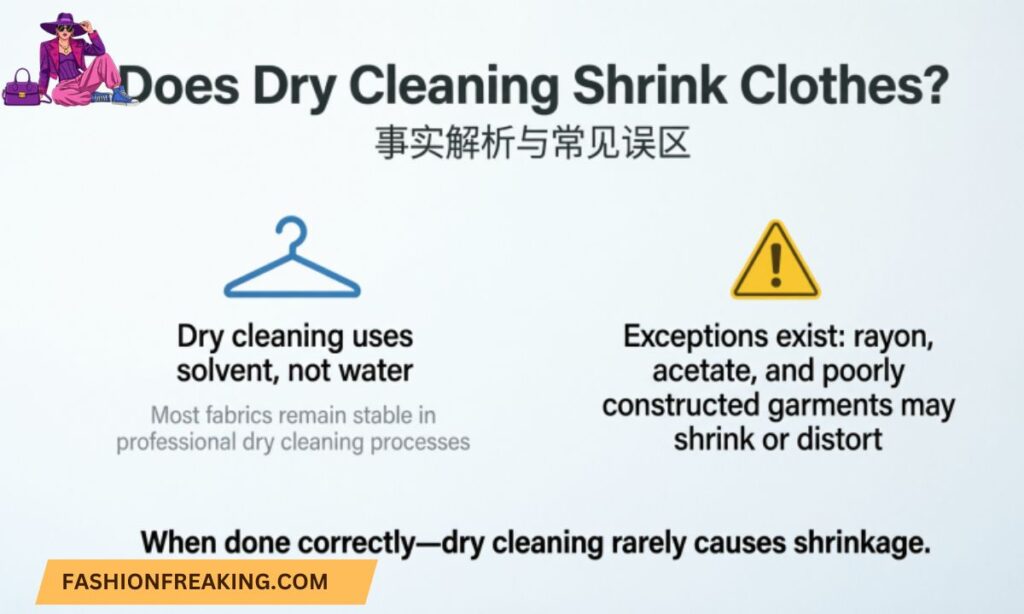
If you’ve ever picked up a tailored blazer or favorite dress from the dry cleaner and found it fitting just a little tighter than before, you’ve probably asked yourself: did dry cleaning shrink this? It’s one of the most common concerns among people who regularly entrust their better garments to professional cleaners. The short answer is — it’s rare, but it can happen. And understanding exactly when and why helps you protect your wardrobe from that risk.
This article breaks down the science behind dry cleaning, which fabrics are most vulnerable, why shrinkage sometimes occurs, and how to ensure your clothes come back the same size they left.
What Is Dry Cleaning, Really?
Despite the name, dry cleaning is not entirely “dry.” The process uses a liquid chemical solvent — most commonly perchloroethylene (known as “perc”), though many modern cleaners now use eco-friendly alternatives — to dissolve and lift dirt, oils, and stains from fabric. The garment is submerged in this solvent inside a machine that also tumbles the clothing for mechanical action, much like a front-loading washing machine.
The key difference from home laundering is the absence of water. Since water and heat working together are the primary causes of fabric shrinkage, dry cleaning is inherently gentler on garments than a standard wash-and-dry cycle. That’s why so many delicate and structured items — wool suits, silk blouses, cashmere sweaters — carry a “dry clean only” label.
Does Dry Cleaning Shrink Clothes?
Under normal, properly functioning conditions, dry cleaning does not shrink clothes. The solvent used does not interact with fabric fibers the same way water does, and reputable dry cleaning machines are specifically engineered to prevent the temperature fluctuations that cause shrinkage.
However, this doesn’t mean shrinkage is impossible. There are specific circumstances where it can and does occur. Knowing those scenarios is exactly what allows you to protect your garments.
Why Clothes Shrink in the First Place
To understand when dry cleaning might cause shrinkage, it helps to know the mechanism behind it. Fabric is made up of interwoven fibers with tiny gaps between them. When those fibers absorb moisture and are then exposed to heat, the water molecules evaporate rapidly — and as they do, they pull the fiber strands closer together. The gaps shrink. The garment shrinks.
Natural fibers are the most vulnerable. Wool, cotton, linen, and silk all have a microscopic structure that makes them highly responsive to moisture and heat. Synthetic fibers like polyester and nylon are more dimensionally stable — their molecular structure doesn’t react to heat and water the same way, making them far less prone to shrinking.
When Dry Cleaning Can Cause Shrinkage
1. Equipment Malfunction — The Chiller
Dry cleaning machines rely on a component called a chiller to prevent the cleaning solvent from overheating. If the chiller malfunctions or isn’t properly maintained, the solvent can reach temperatures that affect delicate fibers — causing them to contract just as they would in an overheated dryer.
2. Too Much Moisture in the Solvent
Here’s a detail most people don’t know: dry cleaning solutions require a very small, carefully controlled amount of water. This trace moisture actually helps the cleaning detergent activate and remove water-based stains like perspiration and coffee. Dry cleaning machines have a water separator to keep moisture levels within safe limits. If this component malfunctions, excess water accumulates in the solvent. When garments are then exposed to the drying heat cycle, that absorbed moisture evaporates — shrinking the fabric just as it would in a conventional dryer.
3. The Pressing and Finishing Stage
The cleaning cycle itself isn’t always where the damage happens. After washing, garments are pressed and finished using steam and heat. Excessive steam or heat pressure during this finishing step can cause natural fiber garments — particularly wool and linen — to tighten and lose shape, especially around structured areas like collars, waistbands, and shoulders.
4. Pre-Spotting Treatments
Before the main cleaning cycle, dry cleaners often pre-treat specific stains using water-based spotting solutions. If these are applied incorrectly, or if the fabric isn’t properly dried before entering the solvent machine, residual moisture can lead to localized shrinkage — often noticeable around seams, cuffs, or hems.
5. Manufacturing Defects in the Garment
Some garments shrink the very first time they’re dry cleaned, regardless of how careful the cleaner is. This is typically caused by a manufacturing defect — the fabric wasn’t properly pre-shrunk or stabilized before it was cut and sewn. In this case, the shrinkage was always going to happen; the dry cleaning just triggered it.
Which Fabrics Are Most at Risk?
| Fabric | Shrinkage Risk in Dry Cleaning | Notes |
| Wool | Medium | Felting and fiber contraction possible with excess moisture or heat |
| Cashmere | Medium–High | Highly sensitive to heat; requires extra care |
| Silk | Low–Medium | Can distort with excess steam or pressure during pressing |
| Linen | Low–Medium | Vulnerable to heat; less risk than home laundering |
| Cotton | Low | Minimal risk unless machine malfunction or high-heat pressing |
| Polyester | Very Low | Dimensionally stable; rarely shrinks |
| Nylon | Very Low | Synthetics generally unaffected by dry cleaning |
| Blended Fabrics | Varies | Depends on fiber composition; natural content increases risk |
Dry Cleaning vs. Home Washing: Shrinkage Risk Comparison
| Factor | Dry Cleaning | Home Washing + Drying |
| Water exposure | None (under normal conditions) | High |
| Heat level | Controlled, lower | Often high (especially tumble drying) |
| Mechanical agitation | Gentle tumbling | Heavy churning |
| Risk to natural fibers | Low | High |
| Risk to delicate fabrics | Low | Very High |
| Overall shrinkage risk | Low (rare) | High (common) |
How to Prevent Shrinkage at the Dry Cleaner
Taking a few simple precautions significantly reduces the risk of coming home to a shrunken garment.
- Choose a reputable cleaner. Equipment maintenance matters enormously. A dry cleaner that keeps their machines properly calibrated eliminates most shrinkage risk. If your clothes consistently come back slightly smaller, find a new cleaner — don’t wait.
- Point out delicate or high-value items. When dropping off cashmere, structured wool, or any garment you’re particularly concerned about, mention it. Good cleaners will apply extra care and may adjust their process for sensitive fabrics.
- Avoid pre-treating at home before dry cleaning. Applying water or household stain removers to a dry-clean-only garment before sending it in can alter how the fabric reacts to the cleaning process. Leave stain treatment to the professionals unless the care label says otherwise.
- Ask about finishing methods. If your garments are especially heat-sensitive, ask whether hand pressing rather than machine pressing is available. The extra care is usually worth it for high-value pieces.
- Look for eco-friendly cleaners using liquid CO₂. Carbon dioxide dry cleaning uses pressurized CO₂ as the solvent and requires no heat in the cleaning cycle itself. It’s one of the gentlest methods available and is essentially shrinkage-free even for the most delicate fabrics.
Also Read This: How to Remove Nonenal Odor from Clothes?
What to Do If Dry Cleaning Has Shrunk Your Clothes
If you notice shrinkage after collecting a garment, act promptly:
- Contact the dry cleaner immediately. Reputable businesses will inspect the garment and — if the damage occurred due to their process — will take responsibility and offer compensation or restoration.
- Ask about professional stretching. Some fabrics, particularly wool and cashmere, can be carefully dampened and stretched back toward their original dimensions using blocking techniques. A skilled dry cleaner or tailor can sometimes restore a garment partially or fully.
- Don’t rewash or dry the item. Any further heat or moisture exposure may worsen the shrinkage or cause irreversible damage to an already stressed garment.
- Accept when it’s not reversible. Fitted items like tailored blazers or structured gowns are the hardest to recover once shrunk. In rare cases, the garment may need to be altered to fit, or replaced.
FAQ’s
Does dry cleaning shrink wool?
Wool can shrink during dry cleaning if there’s excess moisture in the solvent or excessive heat during pressing, but under proper conditions, it’s much safer than home washing.
Can dry cleaning shrink a suit?
A well-maintained dry cleaner should return your suit unchanged, but improper pressing or equipment faults can cause slight tightening around structured areas like the chest or trouser inseam.
Does dry cleaning shrink cotton?
Cotton has very low shrinkage risk during dry cleaning compared to machine washing, but it can still be affected if excess moisture enters the cleaning solvent.
Is dry cleaning safer than washing for delicate fabrics?
Yes — for natural fibers and delicate fabrics like silk, cashmere, and wool, dry cleaning is significantly safer than home laundering and reduces shrinkage risk substantially.
Can clothes shrink from dry cleaning steam pressing?
Yes. Excessive steam or heat during the finishing stage is one of the more common causes of minor shrinkage — particularly along seams, collars, and waistbands of wool and linen garments.
Why did my clothes shrink at the dry cleaner?
The most likely causes are a malfunctioning chiller or water separator in the cleaning machine, excessive heat or steam during pressing, or a pre-existing manufacturing defect in the garment itself.
How do I find a dry cleaner that won’t shrink my clothes?
Look for cleaners with well-maintained equipment, positive reviews for handling delicate garments, and those who use modern solvents or eco-friendly liquid CO₂ cleaning methods.
Conclusion
So, does dry cleaning shrink clothes? Not typically — and that’s by design. The dry cleaning process was developed specifically to clean garments that can’t withstand the heat, water, and mechanical stress of home laundering. Under normal, well-maintained conditions, it is one of the safest cleaning methods available for delicate and structured fabrics.
That said, shrinkage can occur when equipment malfunctions, moisture levels in the solvent aren’t controlled properly, or finishing involves too much heat. Natural fibers like wool, cashmere, and linen carry the most risk. The best protection is choosing a reputable, well-maintained dry cleaning service — and speaking up about any garments that need special handling. When you find a cleaner you trust, dry cleaning is consistently the gentler, smarter choice for preserving the fit and quality of your better clothes.

Shoaib is the creative mind behind FashionFreaking.com, sharing trendy insights on shoes, jewelry, clothes, and modern fashion to inspire confidence, style, and everyday elegance for fashion lovers worldwide.