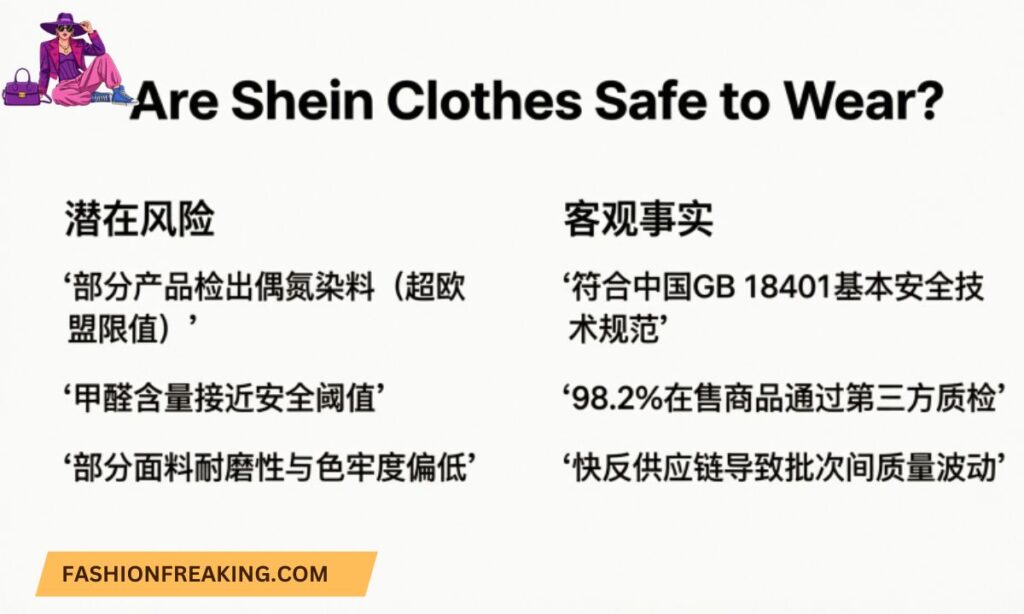
Millions of shoppers order from Shein every day, drawn in by rock-bottom prices and an endless catalog of styles. But a growing body of independent research is raising real questions: are Shein clothes safe to wear? The short answer is: it depends — but there are legitimate reasons to be cautious, especially for children, people with sensitive skin, and anyone who skips washing new clothes before putting them on.
This article breaks down the chemical concerns, the independent test results, what Shein is doing in response, and practical steps you can take to protect yourself.
What Chemicals Have Been Found in Shein Clothing?
Several independent investigations have tested Shein garments for hazardous substances. The findings are worth knowing before your next order.
Key Studies and Their Results
Greenpeace Germany (2022 and 2025): In 2022, Greenpeace tested 47 Shein products and found 7 contained hazardous chemicals above EU regulatory limits. After Shein pledged improvements, Greenpeace retested in 2025 — this time testing 56 garments. The results were worse: 18 out of 56 items (32%) exceeded EU legal limits for harmful chemicals, including some children’s clothing.
University of Toronto (CBC News, 2021): Researchers examined fast fashion samples from Shein, AliExpress, and Zaful. About one in five items had unsafe concentrations of pollutants, including lead, phthalates, and PFAS — commonly called “forever chemicals.”
Öko-Test Germany (2024): A German consumer testing organization found phthalates, lead, formaldehyde, and other toxic substances in Shein garments, with some items exceeding the limits allowed under EU REACH regulations.
The Specific Chemicals of Concern
| Chemical | Found In | Health Risk |
| Phthalates | Synthetic fabrics, shoes | Endocrine disruptor; linked to reproductive and hormonal issues |
| Lead | Dyes, accessories | Skin/eye irritation; neurological harm, especially in children |
| PFAS (“forever chemicals”) | Water-repellent coatings | Linked to cancer, immune suppression, growth disorders |
| Formaldehyde | Wrinkle-resistant finishes | Skin irritation, allergic reactions, potential carcinogen |
| Cadmium | Metal hardware, dyes | Toxic to kidneys and bones |
| Alkylphenol ethoxylates (APEOs) | Detergent residues in fabric | Hormone-disrupting effects |
How Are People Exposed to These Chemicals?
You don’t have to ingest a garment for it to affect you. Exposure happens in multiple ways:
- Direct skin contact — Chemicals in fabric can absorb through the skin, especially during physical activity when you sweat.
- Inhalation — Tiny synthetic fibers and chemical vapors can be inhaled, particularly in enclosed spaces.
- Washing — When you wash fast fashion clothing, chemicals and microplastics are released into wastewater, eventually entering rivers, soil, and the food chain.
- Children’s clothing — Kids are at higher risk because their bodies are still developing and they’re more likely to put clothing in their mouths.
Are All Shein Items Dangerous?
No — and this nuance matters. Not every item Shein sells is problematic. The 2025 Greenpeace testing found that 32% of tested products exceeded EU limits, which also means roughly 68% of items tested were within legal chemical limits.
The risk level tends to vary by:
- Product type: Synthetic accessories, water-repellent outerwear, and children’s items showed higher contamination rates.
- Fabric composition: Items with high polyester content (Shein uses polyester in approximately 82% of its products) are more likely to contain plasticizer chemicals like phthalates.
- Natural vs. synthetic fibers: Natural fiber items like cotton or linen tend to carry fewer chemical processing risks — though dyes and finishes still matter.
What Is Shein Doing About It?
Shein has not ignored the criticism entirely. According to the company’s own 2025 report, Shein conducted over two million product safety tests in 2024, working with third-party agencies including Intertek, SGS, Bureau Veritas, and TÜV. The brand also maintains a Restricted Substances List (RSL) that vendors must comply with.
Shein also states it:
- Removes products immediately when a safety claim is raised
- Terminated relationships with more than 260 non-compliant sellers in 2024
- Requires vendors to submit documentation for textiles with specific regulatory requirements
However, independent organizations like Greenpeace Germany argue these measures are not working — pointing to the fact that chemical violations were more widespread in 2025 than in 2022, despite Shein’s pledges. They have called on the EU to implement stricter legislative controls on platforms like Shein and Temu.
Shein Clothes Safety: Who Is Most at Risk?
Certain groups face higher potential risks from chemical exposure through clothing:
- Infants and young children — Developing systems are far more sensitive to endocrine disruptors and heavy metals. Several items flagged in testing were children’s clothing.
- People with eczema or sensitive skin — Formaldehyde and synthetic dyes commonly trigger contact dermatitis.
- Pregnant women — Phthalates and PFAS have been linked to developmental risks in unborn children.
- Frequent wearers — Cumulative exposure over time increases risk, even if individual item levels seem modest.
How to Reduce Your Risk If You Buy from Shein?
If you choose to shop at Shein, here are practical steps that can meaningfully reduce your chemical exposure:
Before You Wear New Clothes
- Always wash new items before first wear. While washing cannot remove all chemicals, it can significantly reduce surface residues and dye concentrations.
- Use a natural or low-toxin laundry detergent. Standard detergents can add their own chemical load.
- Add baking soda to your wash cycle — it can help bind and remove some chemical residues.
- Air dry clothes outside when possible rather than in a sealed dryer or indoors.
While Shopping
- Check fabric labels. Favor items with higher natural fiber content (cotton, linen, bamboo) over 100% polyester.
- Avoid children’s clothing from Shein entirely, given the elevated risk findings and children’s higher vulnerability.
- Look for items that carry third-party safety certifications such as Oeko-Tex Standard 100 or GOTS (Global Organic Textile Standard) — though these are rare on Shein’s platform.
- If an item has a strong chemical smell when you open the package, consider returning it.
Also Read This: What Does 2T Mean in Baby Clothes?
Long-Term Strategy
- Consider buying second-hand clothing from verified platforms — previously washed items carry significantly lower chemical loads.
- Invest in fewer, higher-quality pieces from brands that publish transparent supply chain and chemical management information.
Shein vs. Other Fast Fashion Brands: How Does It Compare?
Shein is not uniquely toxic among fast fashion brands — but its scale and production speed make it a particular concern. The company releases thousands of new styles daily, which leaves almost no time for thorough safety vetting of individual items. In contrast, traditional fast fashion brands like H&M and Zara operate on weekly or monthly new-item cycles.
| Factor | Shein | H&M | Zara |
| New styles per day | ~2,000–10,000 | ~100–200 | ~100–150 |
| Primary fabric | Polyester (82%) | Mixed | Mixed |
| Independent chemical testing violations | Yes (32% in 2025) | Occasional reports | Occasional reports |
| Transparency reports | Limited | Published | Published |
| Price point | Very low | Low–mid | Mid |
The Bottom Line: Are Shein Clothes Safe?
The evidence suggests that Shein clothing carries a real, measurable chemical risk — one that is higher than what you’d find with regulated, domestic retailers. That said, the risk is not absolute. Many individual items may be perfectly safe to wear, particularly after washing, and for healthy adults with normal skin.
The genuine concern lies with:
- Children’s items specifically
- Highly synthetic accessories and outerwear
- People with skin sensitivities or underlying health conditions
- Anyone making Shein a primary, high-volume wardrobe source
Smart shopping, always washing before wearing, and opting for natural fiber items where possible are the most effective ways to reduce risk if Shein remains part of your shopping habits.
Frequently Asked Questions
Is it safe to wear Shein clothes without washing them first?
No — always wash new Shein items before wearing. Washing reduces surface chemical residues and dye concentrations, even if it can’t eliminate everything.
Does Shein clothing contain lead?
Yes, independent tests including a University of Toronto study have found elevated lead levels in some Shein items, particularly in accessories and dyed fabrics.
Are Shein children’s clothes safe?
Extra caution is warranted — some tested children’s items exceeded EU chemical limits. It’s best to avoid Shein for children’s clothing where possible.
What are PFAS, and are they in Shein clothes?
PFAS are synthetic “forever chemicals” found in water-repellent coatings. Greenpeace’s 2025 tests found PFAS in 7 of 18 non-compliant Shein items.
Can washing Shein clothes remove all the chemicals?
Washing reduces but cannot fully eliminate embedded chemicals like lead and phthalates. It’s a useful precaution, not a complete solution.
Is Shein clothing safe for people with sensitive skin?
People with eczema or skin sensitivities are at higher risk of reactions from dyes and formaldehyde used in Shein garments. Natural fiber items are a safer choice.
Does Shein test their products for safety?
Shein claims to have conducted over two million safety tests in 2024. However, independent Greenpeace testing still found widespread violations in 2025, suggesting the measures are insufficient.
Are Shein clothes more toxic than other fast fashion brands?
Not necessarily in every item, but the scale and speed of production, plus independent testing results, suggest a higher average risk compared to more regulated brands.

Shoaib is the creative mind behind FashionFreaking.com, sharing trendy insights on shoes, jewelry, clothes, and modern fashion to inspire confidence, style, and everyday elegance for fashion lovers worldwide.