If you’ve ever stood in the baby clothing aisle staring at a tag that reads “2T” and wondered what it actually means, you’re not alone. Toddler clothing sizes can feel like a foreign language, especially when you’re also juggling 24-month sizes, growth spurts, and potty training. This guide breaks down exactly what 2T means, how it differs from other sizes, and how to pick the right fit for your little one every time.
What Does 2T Mean in Baby Clothes?
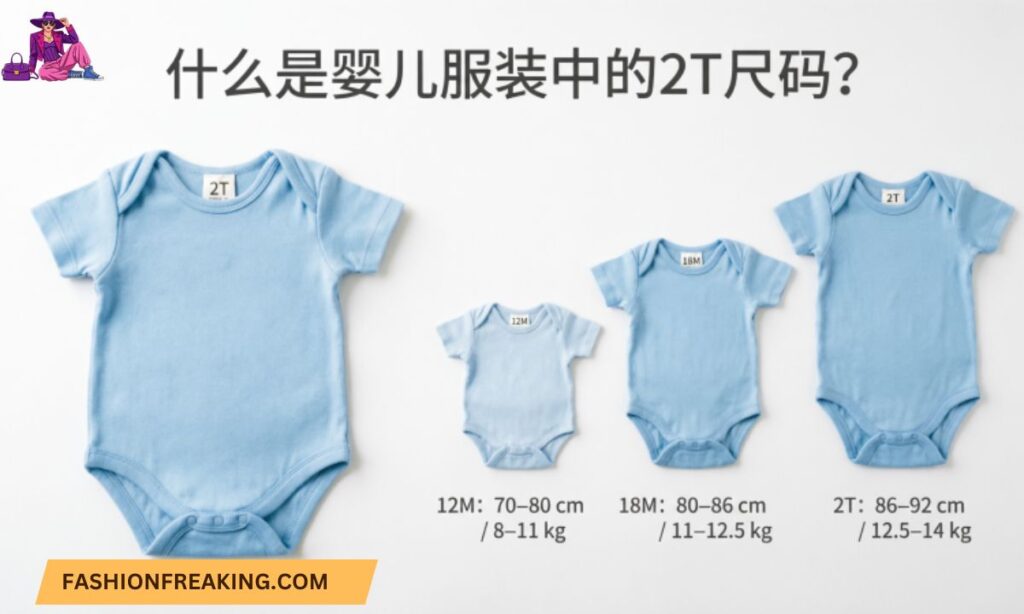
2T stands for “2 Toddler.” The “T” in the label literally means toddler, and the number indicates the age range it’s designed for. Specifically, 2T clothing is made for children between the ages of 2 and 3 years old.
Unlike baby clothing — which is labeled in months (like 3M, 6M, or 18M) — toddler clothing uses the “T” system to signal a shift in body shape, developmental stage, and physical activity level. When your child hits that 2T milestone, it means they’re moving from the baby phase into the toddler phase, and their clothes are designed to reflect that change.
The “T” sizing system continues as your child grows: 2T, 3T, 4T, and 5T are all toddler sizes, each stepping up in height, weight, and proportions.
2T Size Chart: Height and Weight Guide
Most major brands follow similar sizing benchmarks for 2T clothing, though slight variations exist. Here’s a general reference chart:
| Size | Age Range | Weight | Height |
| 18–24 Months | 18–24 months | 26–30 lbs | 31–33 inches |
| 2T | 2–3 years | 27.5–30 lbs | 33–35 inches |
| 3T | 3–4 years | 32–35 lbs | 35–38 inches |
| 4T | 4–5 years | 35–39 lbs | 38–41 inches |
Pro Tip: Always check a brand’s individual size chart before buying. A child measuring 34 inches tall and 28 pounds is a strong fit for 2T across most brands, but cuts and proportions can vary.
What’s the Difference Between 2T and 24 Months?
This is one of the most common questions parents ask — and for good reason. Both sizes are meant for children around the same age, so why do they exist as separate categories?
The Cut and Fit
The biggest difference between 24 months and 2T comes down to how the clothes are cut.
24 Months clothing is designed with extra room in the seat and hips to accommodate a diaper. The silhouette is wider and rounder, reflecting the typical baby body shape — think chubby legs, a round tummy, and a diaper bulge.
2T clothing is cut slimmer and longer. It assumes the child is either potty training or fully trained, meaning there’s no extra diaper room built into the seat. The proportions are more upright, suited for a child who walks, runs, and climbs with increasing confidence.
The Snap Situation
Another tell-tale difference is snaps. Baby clothes — including 24-month sizes — typically feature snaps around the diaper area for easy changes. Once you reach 2T, those snaps largely disappear. The clothing assumes diapers are no longer (or soon won’t be) part of the picture.
The Age Interpretation
Here’s something that trips up a lot of parents: the way age is used in each system is actually flipped.
- In the months system, the number represents the oldest age the item is designed for. So “24 months” fits a child who is 18 to 24 months old.
- In the T system, the number represents the youngest age the item is designed for. So “2T” fits a child who is 2 to 3 years old.
It sounds confusing, but once you understand this logic, navigating the two systems becomes much easier.
Quick Comparison: 24 Months vs. 2T
| Feature | 24 Months | 2T |
| Age Range | 18–24 months | 2–3 years |
| Diaper Room | Yes, extra room built in | No, slimmer cut |
| Snaps | Common | Rare |
| Silhouette | Wider, rounder | Slimmer, longer |
| Best For | Babies still in diapers | Potty training toddlers |
When Should Your Child Move Into 2T?
There’s no exact moment when every child transitions to 2T — growth rates vary widely. That said, here are the most reliable signs it’s time to size up:
- Clothes feel tight around the tummy or thighs — if your child is visibly uncomfortable in their current size, it’s time.
- Legs and sleeves are too short — when ankles and wrists are consistently exposed, your child has likely outgrown the current size.
- Increased mobility — if your toddler is running, climbing, and exploring, 2T’s slimmer, more flexible cut may suit them better.
- Potty training has started or completed — once you remove the diaper from the equation, the slimmer 2T cut will actually fit better.
- 24-month clothes are getting snug — this is your clearest signal.
Most children make this transition around their second birthday, but it’s completely normal for some to enter 2T at 18 months and others not until 2.5 years.
How 2T Sizing Works Across Different Brands?
One important thing to know: not all 2T sizes are created equal. Each brand interprets the size slightly differently, which is why a 2T from one brand might fit perfectly while the same label from another brand runs snug or large.
Here’s how some popular brands generally approach 2T sizing:
- Carter’s — Known for generous sizing; their 2T often runs a little roomy, which is great for kids between sizes.
- Old Navy / Gap Kids — Tends to run true to size with a slightly slimmer cut.
- Gerber Childrenswear — Falls in line with standard 2T measurements: roughly 27.5–30 lbs and 34–35 inches.
- H&M — European sizing can run narrower; always check the centimeter measurements.
The safest approach is always to check the brand’s specific size chart and, when possible, measure your child’s height, weight, and waist before purchasing.
Also Read this: Can You Wash Jeans With Other Clothes?
Tips for Shopping 2T Clothing
Size Up When in Doubt
If your child is right on the border between 24 months and 2T, go with 2T. Toddlers grow fast, and a slightly roomier fit gives you more wear out of each piece.
Focus on Height Over Weight
Height is generally the more reliable measurement for clothing fit, especially for tops and one-piece garments. A child can gain weight without growing taller, making weight alone a less accurate guide.
Consider the Season
Buy slightly ahead for upcoming seasons. If your toddler is currently in 2T in winter, consider buying 3T for the following summer rather than stocking up on 2T warm-weather clothes they may outgrow.
Check for Adjustable Waistbands
Many 2T bottoms — especially pants and shorts — come with adjustable internal waistbands. These are a game-changer for toddlers with slim waists but longer legs, or vice versa.
Wash Before You Buy Too Many
Shrinkage is real. Wash a garment once before deciding whether to stock up on that size in a particular brand, especially for natural fiber fabrics like cotton.
2T vs. Size 2: Are They the Same?
No, they are not the same — though they’re close. Size 2 (without the T) is a numeric children’s size, typically found in department stores alongside sizes 4, 6, 8, and so on. Size 2 is generally cut slimmer than 2T, designed for children who are fully potty trained and losing their toddler proportions.
If your child still has that classic toddler body shape — round belly, short torso, wide hips from diapers — stick with 2T. Size 2 is the next step once they slim out a bit more.
Frequently Asked Questions
What does the “T” in 2T stand for?
The “T” stands for Toddler. It indicates the clothing is designed for toddlers rather than infants, with proportions suited for walking, running, and active play.
Is 2T the same as 24 months?
No. While both sizes fit children around 2 years old, 24 months has extra room for diapers and a wider cut, while 2T is slimmer and longer, designed for toddlers who are potty training or no longer in diapers.
How much does a child in 2T typically weigh?
Most children in 2T weigh between 27.5 and 30 pounds and stand around 33 to 35 inches tall, though this varies by brand.
Can a 1.5-year-old wear 2T?
Yes! If your child is tall and lean, they may fit into 2T before turning two. Always go by measurements rather than strictly following the age label.
Should I buy 2T or 3T if my child is right between sizes?
When in doubt, go up to 3T. Toddlers grow quickly, and the extra room won’t be wasted. A 3T that’s slightly big today will fit well in a few months.
Do all brands size 2T the same way?
No. Sizing varies by brand. Always check the specific brand’s size chart using your child’s height and weight for the most accurate fit.
Conclusion
Understanding what 2T means in baby clothes makes shopping simpler and less stressful. In short, 2T is a toddler size designed for children aged 2 to 3 years — cut slimmer than 24-month clothing, built without diaper room, and proportioned for active, mobile toddlers. The key differences from 24-month sizing come down to cut, snaps, and what stage of development the clothing assumes your child is in.
When shopping, always lean on your child’s actual measurements rather than just their age. Check brand-specific size charts, buy slightly ahead when you can, and remember: every child grows at their own pace. Whether your toddler is still rocking 24-month sizes at 2.5 years or has already jumped into 3T, what matters most is that they’re comfortable and free to explore the world around them.

Shoaib is the creative mind behind FashionFreaking.com, sharing trendy insights on shoes, jewelry, clothes, and modern fashion to inspire confidence, style, and everyday elegance for fashion lovers worldwide.