Finding mold on your favorite shirt or jacket is one of those stomach-dropping moments. Your first instinct might be to toss everything straight into the trash — but that’s not always necessary. Whether you should throw out moldy clothes depends on a few key factors, including how severe the mold is, what type of fabric is affected, and whether anyone in your home has health sensitivities.
This guide covers everything you need to know: when to save moldy clothes, when to toss them, how to safely remove mold from fabric, and how to stop it from coming back.
What Causes Mold to Grow on Clothes?
Mold is a fungus that thrives in warm, moist, and poorly ventilated environments. Clothing is actually an ideal surface for mold spores to settle and multiply — especially when certain conditions are met.
Common causes of mold on clothes include:
- Leaving wet laundry sitting in the washing machine too long
- Storing damp clothes in a sealed bag or tight closet
- Keeping clothes in a basement, attic, or other humid space
- Packing away garments before they’ve fully dried
- Poor air circulation in wardrobes and storage areas
Mold can begin growing within 24 to 48 hours in the right conditions, and the problem often goes unnoticed until you catch that unmistakable musty smell — or spot those fuzzy, discolored patches.
Is Mold on Clothes Dangerous?
Yes, mold on clothing can pose real health risks, though the severity depends on the type of mold and your individual sensitivity.
Mold produces allergens, irritants, and in some cases, toxic substances called mycotoxins. Coming into regular contact with moldy garments can trigger:
- Skin rashes and irritation
- Nasal congestion, sneezing, and runny nose
- Respiratory problems, particularly for people with asthma
- Eye irritation and headaches
- More serious reactions in immunocompromised individuals
Black mold (Stachybotrys chartarum) is the most concerning strain. It produces mycotoxins linked to more severe respiratory and neurological symptoms. If you spot black mold on clothing, disposal is almost always the safer choice.
People who are elderly, very young, pregnant, or have compromised immune systems face a higher risk from mold exposure and should be especially cautious.
Should You Throw Out Moldy Clothes? Know When to Save vs. Discard
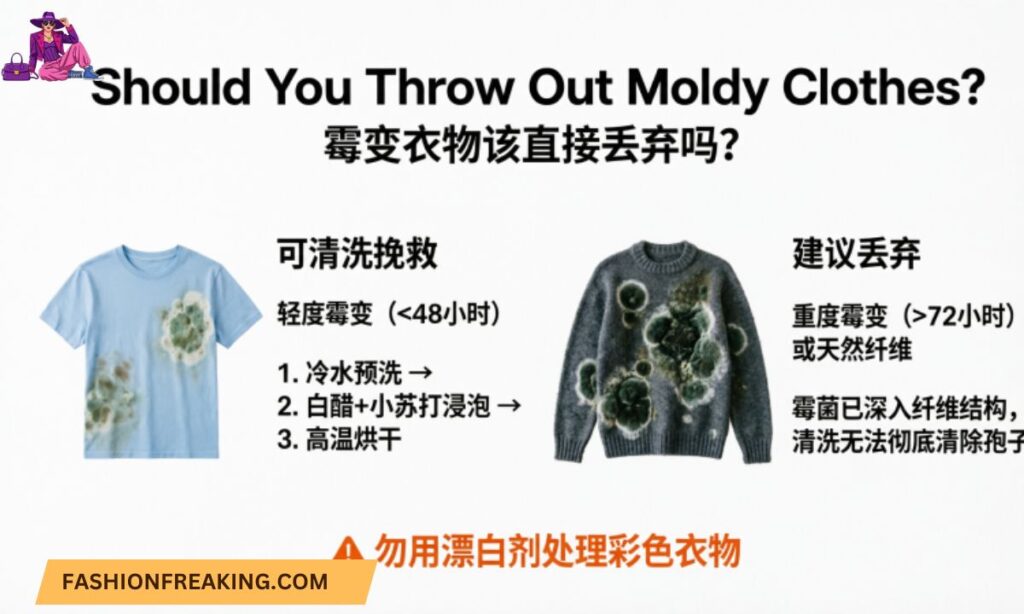
The short answer: not always. Many moldy garments can be successfully cleaned and saved — but some situations call for immediate disposal.
When You Can Save the Clothes
You have a good chance of salvaging moldy clothing if:
- The mold is caught early and covers only a small area (less than 50% of the garment)
- The fabric is durable and washable (cotton, polyester, denim)
- There is no black mold present
- The musty odor is mild and fades after treatment
- The fabric fibers are not structurally damaged (no holes, thinning, or deterioration)
When You Should Throw Them Out
Some situations make disposal the wiser — and healthier — call:
| Situation | Action |
| Mold covers more than 50% of the garment | Throw it out |
| Black mold (dark green/black patches) present | Throw it out |
| Persistent musty smell after multiple washes | Throw it out |
| Fabric is torn, weakened, or deteriorating | Throw it out |
| Items belong to infants, elderly, or immunocompromised individuals | Throw it out |
| Delicate fabrics like silk, lace, or vintage pieces | Throw it out |
| Clothes have been soaked or submerged in water for an extended period | Throw it out |
When in doubt — especially if you or a family member has allergies, asthma, or other respiratory conditions — it’s better to err on the side of caution and discard the item.
How to Remove Mold From Clothes (Step-by-Step)
If you’ve decided the garment is worth saving, here’s how to do it safely and effectively.
Step 1: Take Clothes Outside First
Before anything else, bring the moldy clothes outdoors. This prevents mold spores from spreading into your home and contaminating other surfaces. Wear gloves and a mask to protect yourself from inhaling spores.
Step 2: Brush Off Visible Mold
Using a stiff-bristled brush, gently remove any loose mold from the fabric’s surface. Do this outside so the spores don’t settle indoors.
Step 3: Pre-Treat the Affected Areas
Choose one of these proven pre-treatment methods:
- White vinegar: Soak the garment in a solution of one cup of white vinegar per bucket of warm water for 30–60 minutes. Vinegar is a natural antifungal that kills mold spores on contact.
- Baking soda paste: Mix baking soda with a small amount of water to form a paste. Apply it directly to the moldy spots, let it sit for 15–20 minutes, then gently scrub with a soft brush.
- Hydrogen peroxide (3%): Spray directly onto the moldy area and let it sit for 10 minutes before washing. Effective on cotton and linen fabrics.
- Borax solution: Dissolve half a cup of borax in hot water and use it as a pre-soak or add it directly to the wash cycle.
Step 4: Wash in Hot Water
Wash the treated clothes separately from other laundry on the hottest water setting safe for that fabric. Most mold spores die at temperatures above 140°F (60°C). Add your regular detergent, and consider adding one cup of white vinegar to the wash cycle for added mold-killing power.
Step 5: Dry in Direct Sunlight
Air drying in direct sunlight is the gold standard for post-mold treatment. UV rays from the sun naturally kill any remaining mold spores and help eliminate lingering odors. Avoid putting clothes directly in the dryer after a mold treatment — heat can set stains into the fabric permanently.
Also Read This: How to Get Rid of Clothes?
What About Dry-Clean-Only Clothes?
If the moldy item is labeled “dry clean only,” don’t attempt to machine wash it. Instead, take it to a professional dry cleaner and tell them about the mold before dropping it off. Not all dry cleaners will accept heavily moldy garments, so call ahead. For lightly affected delicate items, the dry cleaning process can be effective — but severe mold contamination may still mean the item isn’t salvageable.
Can You Wash Moldy Clothes With Other Laundry?
No — always wash moldy clothes in a separate load. Washing moldy garments with clean clothes risks cross-contamination. Once you’ve run the moldy load, run a cleaning cycle on your washing machine itself: add two cups of white vinegar and run an empty hot water cycle to kill any mold spores left behind in the drum.
How to Prevent Mold on Clothes?
Prevention is far easier than remediation. A few consistent habits can dramatically reduce your chances of dealing with moldy laundry again.
- Don’t leave wet laundry sitting. Transfer clothes to the dryer or clothesline within an hour or two of washing.
- Dry clothes completely before storing them. Even slightly damp garments can develop mold in a sealed wardrobe.
- Improve closet ventilation. Use slatted shelves, keep closet doors slightly ajar, or place a small fan nearby to encourage airflow.
- Use a dehumidifier in damp rooms like basements and bathrooms where humidity tends to spike.
- Store seasonal clothes properly. Use breathable cotton storage bags rather than airtight plastic bins, particularly in humid climates.
- Clean storage areas regularly to remove dust and moisture that feed mold growth.
- Air out stored clothing periodically, especially items in rarely opened closets or storage units.
How to Safely Dispose of Moldy Clothes?
If you’ve decided the garment needs to go, don’t just toss it loosely into the trash. Follow these steps to prevent spreading mold spores through your home:
- Seal the moldy item in a plastic bag before carrying it through the house.
- Wear gloves and a mask while handling heavily moldy items.
- Tie the bag tightly and place it directly in an outdoor bin.
- Check your local disposal guidelines — in some areas, heavily mold-contaminated materials may need to be treated as hazardous waste.
- Wash your hands thoroughly after handling.
FAQ’s
Can mold permanently damage clothes?
Yes. If mold is left untreated for too long, it can weaken fabric fibers, cause permanent discoloration, and leave stains that no amount of washing will remove.
Does washing clothes kill mold?
Hot water washing kills most mold spores, but it may not eliminate deep-seated mold. Pre-treatment with vinegar, borax, or hydrogen peroxide significantly improves results.
Can you get sick from wearing moldy clothes?
Yes. Regular contact with mold-contaminated clothing can trigger skin irritation, allergic reactions, and respiratory issues, particularly in sensitive individuals.
How do I know if my clothes have mold or just mildew?
Mildew appears as flat, powdery gray or white spots on the surface and is generally easier to remove. Mold is typically fuzzy, raised, and may appear green, black, or dark brown — and it penetrates deeper into fabric fibers.
Is white mold on clothes dangerous?
White mold (often Penicillium or Aspergillus) can still cause allergic reactions and respiratory issues. It’s less immediately alarming than black mold, but should still be treated promptly and thoroughly.
Should I throw out clothes after a flood?
Items soaked in floodwater and left wet for more than 24–48 hours are at very high risk for deep mold absorption and bacterial contamination. In most cases, flood-soaked clothing should be discarded, especially if the water was contaminated.
Conclusion
So, should you throw out moldy clothes? Not necessarily — but you shouldn’t automatically try to save everything either. Light, surface-level mold caught early on a washable fabric can usually be treated and salvaged with the right approach: outdoors brushing, an appropriate pre-treatment, a hot water wash, and sun drying. But heavy mold growth, black mold, persistent odors, fabric damage, or clothing belonging to vulnerable individuals are all clear signs it’s time to let the garment go.
The most important thing is to act quickly. The longer mold sits on fabric, the deeper it penetrates and the harder it becomes to fully remove. And above all, always put your health and your household’s health first — no item of clothing is worth compromising that.

Shoaib is the creative mind behind FashionFreaking.com, sharing trendy insights on shoes, jewelry, clothes, and modern fashion to inspire confidence, style, and everyday elegance for fashion lovers worldwide.