
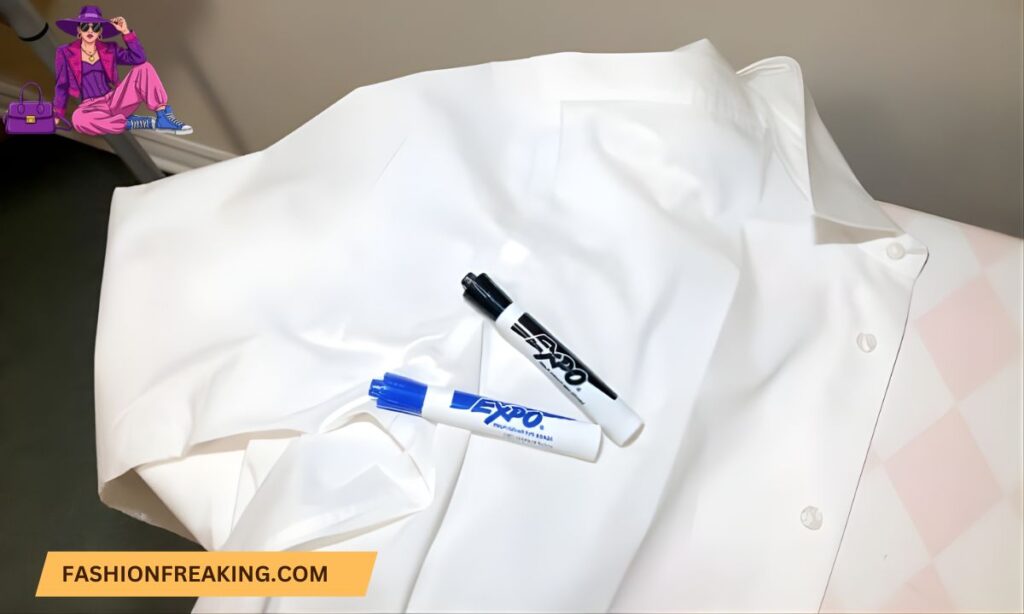
Dry erase marker on clothes is one of those frustrating accidents that can happen in a split second — at work, during a school project, or while helping your kid with homework. The good news? You don’t have to throw that shirt away. With the right technique and a few household items, you can remove dry erase marker stains from fabric quickly and effectively.
This guide covers every proven method, from rubbing alcohol to hydrogen peroxide, so you can rescue your favorite clothes no matter how stubborn the stain.
Why Dry Erase Marker Is Tricky to Remove from Fabric
Before jumping into removal methods, it helps to understand what you’re dealing with. Dry erase markers contain pigments, solvents, and release agents — a combination designed to stick to non-porous surfaces like whiteboards and glass. When that ink lands on fabric, the pigment particles get trapped deep inside the fibers.
Unlike washable markers, dry erase ink is not water-soluble. Simply tossing the item in the wash won’t work. You need a solvent-based approach to break down the ink before laundering.
The most important rule: Act fast. The longer a dry erase stain sits, the deeper it sets into the fibers — especially with body heat accelerating the bonding. Treat it as soon as you notice it.
What You’ll Need
Most of these items are already in your home:
- Rubbing alcohol (isopropyl alcohol, 70% or higher)
- Clean white cloths or paper towels
- Dish soap (Dawn or similar)
- Hydrogen peroxide
- Baking soda
- White vinegar
- Hand sanitizer (alcohol-based)
- OxiClean or enzyme-based laundry detergent
- Hairspray (non-oil-based)
Method 1: Rubbing Alcohol (Most Effective for Most Fabrics)
This is the go-to method recommended by cleaning experts and backed by real-world results. Rubbing alcohol dissolves the oily pigments in dry erase ink without damaging most common fabrics.
Step-by-step instructions:
- Place paper towels underneath the stain. Lay the garment stain-side down on a stack of paper towels. This prevents the ink from transferring to other parts of the fabric.
- Apply rubbing alcohol from the back. Using a clean cloth or cotton ball, dab rubbing alcohol around the outer edge of the stain first, then work inward. This prevents the stain from spreading.
- Blot — never scrub. Scrubbing pushes the ink deeper into the fabric. Use gentle, dabbing motions and replace your cloth or paper towels as they absorb the ink.
- Rinse with cold water. Flush the treated area with cold water. Avoid hot water — heat sets stains permanently.
- Pre-treat and machine wash. Apply a small amount of liquid dish soap or an enzyme-based stain remover, then wash in cold water on a normal cycle.
- Air dry and inspect. Do not put the garment in the dryer until the stain is completely gone. Heat from the dryer will permanently set any remaining ink.
Pro tip: Hand sanitizer contains concentrated alcohol gel and is actually easier to work with than liquid rubbing alcohol, especially for on-the-go stain treatment.
Method 2: Hydrogen Peroxide + Dish Soap
This combination is particularly effective on light-colored fabrics and moisture-wicking athletic wear. It’s also great when you don’t have rubbing alcohol on hand.
Steps:
- Wet the stained area with cold water.
- Mix 2 parts hydrogen peroxide with 1 part Dawn dish soap.
- Apply the mixture directly to the stain.
- Gently scrub with an old toothbrush in circular motions.
- Let it sit for 5–10 minutes.
- Sprinkle baking soda over the area and scrub again.
- Rinse thoroughly and machine wash in cold water.
Note: Test hydrogen peroxide on a hidden area first, as it can lighten some dark-colored fabrics.
Method 3: Hairspray
An older but still useful method — hairspray contains alcohol that can dissolve dry erase ink. Make sure it’s a non-oil-based hairspray for this to work.
- Spray the stained area generously with hairspray.
- Blot with a clean cloth. Do not rub.
- Repeat until the stain lifts.
- Rinse with cold water and launder as usual.
Method 4: Vinegar + Baking Soda Paste
A gentler, more natural option that works well on delicate fabrics.
- Mix baking soda with a small amount of water to form a paste.
- Apply the paste directly to the stain and let it sit for 5 minutes.
- Pour a small amount of white vinegar over the paste (it will fizz — that’s normal).
- Blot and rinse with cold water.
- Repeat if needed, then launder normally.
Method 5: OxiClean Soak (For Stubborn or Set-In Stains)
If the stain has already dried or been through the wash, an OxiClean soak can work wonders.
- Rinse the stained area with cold water first.
- Mix OxiClean with water according to package directions.
- Soak the garment for at least 1 hour (up to overnight for tough stains).
- Wash on a heavy soil cycle with laundry detergent.
- Repeat if any stain remains before drying.
Comparison of Removal Methods
| Method | Best For | Effectiveness | Fabric Safety |
| Rubbing Alcohol | Fresh stains, most fabrics | ★★★★★ | High |
| Hydrogen Peroxide + Dish Soap | Athletic/light fabrics | ★★★★☆ | Moderate |
| Hairspray | Light stains, quick fix | ★★★☆☆ | Moderate |
| Vinegar + Baking Soda | Delicate fabrics | ★★★☆☆ | High |
| OxiClean Soak | Set-in or old stains | ★★★★☆ | High |
Tips for Specific Fabric Types
Different fabrics respond differently to stain removal treatments. Here’s a quick guide:
- Cotton and denim: These handle rubbing alcohol well. Use the standard alcohol method with confidence.
- Polyester and moisture-wicking fabrics: Try hydrogen peroxide + dish soap. Alcohol can sometimes affect the finish of synthetic fabrics.
- Delicate fabrics (silk, wool): Go with the vinegar and baking soda method. Avoid harsh solvents and always test a hidden area first. Consider professional dry cleaning for expensive or delicate pieces.
- Dark-colored fabrics: Avoid hydrogen peroxide. Stick with rubbing alcohol or an enzyme-based cleaner.
- White fabrics: You have more flexibility. OxiClean or hydrogen peroxide can safely brighten white fabric while lifting the stain.
What NOT to Do
Avoid these common mistakes that can make things worse:
- Don’t rub the stain. Always blot. Rubbing spreads the ink and drives it deeper into fabric fibers.
- Don’t use hot water. Cold water is key for rinsing. Heat bonds the ink to the fabric.
- Don’t put it in the dryer until you’re sure the stain is gone. Dryer heat permanently sets any remaining ink.
- Don’t skip pre-treatment. Throwing a dry erase-stained garment straight into the washing machine without pre-treatment is rarely effective.
When to Call a Professional
If you’ve tried multiple methods and the stain remains, or if the garment is made from a sensitive material like silk, cashmere, or structured wool, take it to a professional dry cleaner. Let them know what type of stain it is — that helps them choose the right treatment.
Preventing Dry Erase Marker Stains
Prevention is always easier than removal. A few simple habits can save you the hassle:
- Wear an old shirt, apron, or protective cover when using dry erase markers regularly, especially in classrooms or home offices.
- Store markers with caps tightly on to avoid accidental leaks.
- Keep markers away from clothing and fabric surfaces when not in use.
- For kids, consider washable dry erase markers, which use water-soluble dyes that rinse out much more easily.
Conclusion
Getting dry erase marker out of clothes is totally doable — the key is acting quickly and using the right solvent. Rubbing alcohol is your most reliable weapon for fresh stains, while OxiClean soaks and hydrogen peroxide mixtures are your best bet for tougher or older stains. Always blot, never rub, keep heat away from the stain until it’s fully gone, and air dry before declaring victory.
With the methods above, most dry erase marker stains — even set-in ones — can be lifted without damaging your clothes.
Frequently Asked Questions
Does dry erase marker come out of clothes after washing?
Not if washed without pre-treatment. You need to treat the stain with rubbing alcohol or a solvent first before laundering.
Can I use nail polish remover to remove dry erase marker from fabric?
Yes, acetone-based nail polish remover can work, but test it on a hidden area first — it can damage some synthetic fabrics.
Does dry erase marker come out of white clothes?
Yes, and white clothes are actually easier to treat since you can safely use hydrogen peroxide or OxiClean without worrying about color fading.
Will vinegar remove dry erase marker from clothing?
Vinegar alone has limited effectiveness, but a vinegar and baking soda combination can help loosen lighter stains, especially on delicate fabrics.
What removes dry erase marker from clothes fast?
Rubbing alcohol or alcohol-based hand sanitizer applied immediately gives the fastest results for fresh stains.
Does hand sanitizer remove dry erase marker from clothes?
Yes — alcohol-based hand sanitizer is an effective and convenient alternative to rubbing alcohol for treating dry erase stains.
Can dry erase marker stains be removed after drying in the dryer?
It’s much harder, but not impossible. Try an OxiClean soak followed by rubbing alcohol treatment. The heat from the dryer does set the stain, so multiple treatments may be needed.
Is dry erase marker the same as a whiteboard marker?
Yes, dry erase markers and whiteboard markers are the same thing — they use the same ink formulation.

Shoaib is the creative mind behind FashionFreaking.com, sharing trendy insights on shoes, jewelry, clothes, and modern fashion to inspire confidence, style, and everyday elegance for fashion lovers worldwide.